
Blogs

The Professore, Don Aldo Stern, stood gazing at the sculpted portrait of the Blessed Virgin that hung to the side of the altar in the Church of Our Lady of the Angels in Melioria. It was that time of day when no one else was present in the cool, quiet interior of the little church. No one, that is, except a small man in sailors slops, who entered silently and walked up to stand next to Don Aldo. He genuflected before the sculpture of the Holy Mother, and then without a word handed the Professore a large leather couriers pouch. Don Aldo took the pouch, also without speaking. He nodded to the small seafarer, who silently nodded in return, and then genuflected again to the portrait of the Virgin. The little man once more made the sign of the cross, and went out.
As the Professore opened the pouch and looked through the papers it contained, the only sound was the creaking of the big bronze doors of the church, as they closed behind the departing messenger. As he read, Don Aldos brow furrowed and he frowned involuntarily. He stuffed the papers back into the leather pouch, strapped it shut, and looked up once again at the serene face of the Holy Mother. He bowed slightly, crossed himself and strode purposefully out into the brilliant sunlight of the upper piazza.
***************
Conte Fillipe Foscari was reading in the dappled sunlight that poured through the windows of the sitting room in his lodgings in Melioria. The sea breezes, scented with lilac, wafted through the open windows, gently stirring the light curtains. There was a knock at the door, and as the Conte put down the volume of Rousseau he was reading, his servant escorted in the Assistente Custode from the Accademia, Don Alphonso, an elderly gentleman who was notable for his old-style periwig and gruff manner. Don Alphonsos expression, as always, was one of resignation and permanently lingering irritation, not unlike the look of a dead sea-bass on a market-stall counter by the docks. He bowed stiffly, and the Conte Foscari tried not to smile at the grumpy old scholars stiff and archaic manner.
Buongiorno, Signor Custode, said the Conte.
The scholar coughed and began, Greetings, Signor Conte. The Professore, Don Aldo, respectfully requests that you meet him by the ruins on the eastern side of the island...he has something that he thinks will be of great interest to your honored self. I trust you know the place?"
The Conte nodded. Yes of course, I will come immediately. I am unsure of where you mean. Would you be so kind as to show me the way?
The expression on the old custode's face does not change, but there was the merest suggestion of a sigh. "As the Conte wishes... I am at your service."
****************************

Don Aldo stood in the shade of the tall trees that surrounded the remnants of the old Roman well-head. He could see Don Alphonso and the Conte approaching on the other side of the cascade through the olive grove. The Professore watched as his assistente custode stopped and pointed in Don Aldos direction, then bowed and turned to trudge away in towards the accademia . Don Aldo smiled and bowed as the Conte Foscari climbed up the rise towards him. The Conte graciously bowed in return.
Signor Stern, how wonderful to see you on such a beautiful day. Your good assistente custode indicated you had something I would find of interest. His eyes strayed to the leather couriers pouch the Professore held.
Don Aldo nodded. Signor Conte, a pleasure, as alwaysI appreciate your willingness to come and see me on such short notice."
The Conte responded, Of course, its likewise a pleasure to see you, and I confess at being intrigued your messenger gave me the impression that it was important
In my judgment, yes it is," answered, Don Aldo. You will, I hope, forgive me for asking that you meet me in this curious location...but I thought discretion and some privacy would be...desirable.
The Conte made it clear that he always appreciated discretion, and their discussion quickly turned to the subject of the packet that Don Aldo held: he explained it had been sent by some colleagues of his, associates in a network of individuals who shared a common background and goals. When Conte inquired further about the nature of this group, Don Aldo paused for a moment and looked at the Conte appraisingly before continuing.

Signor Conte, you are aware that various interests...governmental and clerical, have a desire to suppress certain groups and organizations, yes?
The Conte nodded. Yes...are you referring to any specific ones?
Indeed, I am, replied Don Aldo. One of those that I am referring to is one that you, it would seem, are in some way...um...connected with.
Conte Fillipe Foscari wondered if the Professore had guessed correctly; if his informants were accurate, or if he was basing his conclusions on the usual rumors and speculation that circulated in Venezia...but he said nothing yet, and instead waited for the other man to continue.
The Professore went on, In the curious way that the world works...there is another group, a group that is very, very different from the one you are associated with, but that is likewise being suppressed by the church and certain governments...a group to which I once belonged...and which now still persists in various forms and in various locations...including the clandestine network which I mentioned...and which has sent this couriers packet from your home city of Venezia. At my request, our associates there have been making inquiries and observations related to this odd situation, in which the Contessa Foscari was lured back to Venezia under false pretenses, while you, Signor Conte, were kept here, far to the south. Well, they have discovered some things: who is behind the letters and trickerywhat they seem to be seekingand as the things they learned seemed a bit surprising, our network went to considerable effort to get this packet of information here to me as quickly as possible, in order that I might do with it whatever I think is best. And I think, clearly what is best, would be to share it with you, my dear Conte.
Really !!! The Conte was quite dumbfounded by all this. Howunusualand potentially risky
Don Aldo smiled. As far as this being risky...welllife is a series of calculated risks. Anyone who thinks that life is predictable and that there is any place or situation in which one can feel entirely safe, they are deluding themselves. Nonetheless, we must weigh the potential benefits and potential risks...and we must ultimately consider what will be the right thing to do. Life is dangerous, life is unpredictable, but that cannot stop us from taking actions that are necessaryor rightand in this case, I have decided the right thing to do is to make you aware of the unusual nature of who is plotting against you and your daughter.
The Conte Foscari looked thoughtful. Hmmmm, I had thought it was business competitors. Then he shrugged. Maybe I had hoped it was just that
The Professore shook his head. In order to determine the course of action I should pursue, I took the liberty of examining the documents contained in this packet. No Signor Conte, most definitely, this is not about business.
What does it say?
I would prefer for you to look at the contents and draw your own conclusions, Signor Conte.

Yes...if you will permit me to take a moment to review the papers, I would like to do so.
Don Aldo opened the pouch and drew out some papers which he handed to the Conte, who, turning slightly away, immediately devoured their contents. As he read, he muttered, ah, Cristofoli!
The Professore nodded. Yes. Cristofoliand his operatives. Please take these papers with you, with my complimentsand use the information they contain to guide you and your friends in making your plans, and do what you feel you must do to look after your own interests.
The Contes eyes flashed. He is a fanatic who has made it his business to attack all Cults as he calls them. It seems they are trying to get to my daughter, the Contessa, as a means of getting an advantage over me, so they could pressure me for informationfor namesYes...I am not so surprised. Then he smiled. They will not gain the upper hand so easily. The Contessa is safe with friends of mine. She had always been taught what to do in an emergency.
And now that you know who is behind this, that gives you an advantage, no?
Hah, so it would seem, Conte Foscari chuckled. I now have a better understanding of the situation and I have options. Then he turned back to Don Aldo. "Forgive me if this soundsmercenarybut tell me how does helping us benefit you and your friends? Under normal circumstances, the organization which I belong to and the one you are associated with would be at odds with one another, no?
Ah, Signor Conte, these are not normal times are they? Don Aldo smiled a curious little smile. Ironically enough, although I am associated with a very different sort of organization than you arewe do share some common circumstances: both the "company" which I once belonged to and your friends have been under attack and driven underground by the church leadership and the authorities in certain kingdoms -- France, Spain, Naples, Portugal, Austria -- and we, as well as you, are reviled for our ways of thinking, which many consider too progressive for their tastes. I believe that if my associates and your organization were to cooperate for a time in various ways, it would not be an unreasonable path to follow. But in the end, I suspect that that the choices I make with regard to matters that involve you and your family are probably not entirely based in reason. If I am honest, I would say that most likely it is personal and largely emotional. I have great respect for you and your daughterand if you will forgive the presumption of the sentiment, I like you both, and if I thought that was not enough reason for my course of action, then what sort of man would I be?
The Conte Fillipe Foscari smiled. Yes, I would be very happy to join forces with you personally, and as for your associateseven if it only a temporary alliance, we do suffer the same thorns in our sides: it is a case of not sailing the same ship, but heading for the same port, Signore.
Very good, replied the Professore. I shall ask my associates to continue to gather information for youto watch those who are working against you and your colleaguesto aid you in your plans, if possible
I would certainly be very grateful for thatis there anything I might do for you in return?
In fact...there is something which would be...of great service...
Please tell me how I can help."
There is here in Melioria...a young man of the "Company" who wishes to return to his homelandin England.
Oh...?
It has become obvious that he is an active member of the Society...and as we are technically here a dependency of the Kingdom of Naples, the Bourbons who rule this region would, of course, take issue with his presence, if they became aware of it. Can you arrange for him to be quietly transported back to England?
Yes I can, easilythat should not be a problem. I have a ship going to England very soon, via some other ports...he could perhaps pass as my agent's assistant. The ship is in Naples and sails in a weekit could stop hereso our only problem is to get him on board without anyone noticing...
Don Aldo grinned, Oh, we can package him up nicelyfollow me, if you please, Signore.
The Conte tucked the papers inside his coat and Don Aldo concealed the leather pouch under an ancient stone. They began the long walk back towards the village, but instead of turning by the obelisk to go back down in the direction of the accademia, they turned towards a small villa next to the church. There, between the house and the vineyard beyond, the Conte could see freshly whitewashed bee houses with rows of tidy hives. A buzzing noise filled the air.
Honey? asked the Conte.
Honey and beeswax, replied Don Aldo. it is our new enterprise. But among the crates and casks we load upon your ship, we could include a goodly-sized barrel containing our young gentleman.
Ahhhhhhhhhhh, The Conte looked around at the beekeeping operation. Very nice.

Don Aldo smiled broadly, We have a Lady, Donna Anais, who has accepted for herself the role of Mistress Beekeeper...she is approaching it in a very scientific mannerstudying every book on the subject of modern apiculture she can locate. We see it as a good new business for us the bees pollinate the other crops on the island and make the honey and wax we can selland also...I find it personally appealing to be able to have something sweet now and then that does not have to come from the enslaved workers of the plantations in Saint Dominigue or Jamaica
The Conte nodded. I understand entirelyon many levels.
They walked through the vineyard, heading to the path leading down to the harbor.
Well, maybe we should do a deal....for realI do like to mix business and pleasure, commented the Conte.
Ha, of course! It gives us a good pretext for being seen together," answered Don Aldo. "Even now, we can say we are having a business discussion as it were. Oh, and on the subject of business
"Yes, Signor Professore?
Would it be possible for you to find me a battery of perhaps six long-barreled bronze 24-pounder cannon...good pieces with longer range than the short-barreled iron 18-pounders I currently have in the old fortress? I can pay top price for the pieces, but it would be contingent upon their being delivered without any...*coughs*...notice being taken by Neapolitan authorities.
Conte Foscari flicked a bee off his lapel and looked pensive a moment. Hmm.....I can always inquire with Giuseppe Beretta, the armourer in Brescia. He might like such a commission, and he understands how to proceed if discretion is paramountso both fabrication and delivery can be done without any fanfareI shall be glad to arrange it, my friend...
"Grazie...milie grazie, Signor Conte." Don Aldo smiled. And it means a great deal to me to be addressed as 'friend' by youwho would have thought that a gentleman like you, a leader among the free-thinkers, would find yourself in a friendship with a former Jesuit?" Then the Professore laughed and said with a wink, "You must be careful not to mention this friendship with an old ex-priest to your free-thinker friends...it might tarnish your reputation with them.
Now the Conte laughed. But remember I was educated by the Jesuits in Bresciain a sense, I owe a great debt to the 'Company' and I have great respect on many levels for your colleagues in the Society and their commitment to furthering knowledge...and I am not so concerned for my reputation...after all, when everyone owes you money, or favours....they tend to think well of you, regardless of the facts.
The two gentlemen continued down the worn stones of the path towards the docks, making their plans as the seagulls circled and cried overhead.
~
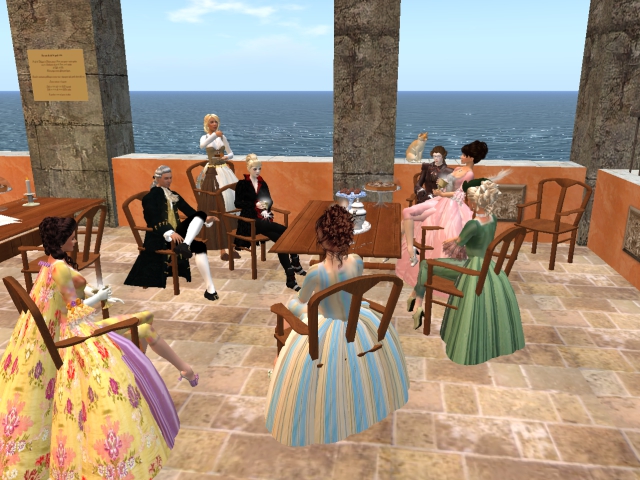 What a wonderful evening was spent at the Aphrodite Caffee in Melioria! It was in the form of a salon wherein we discussed chocolate--its history, ethics and economics within the context of the year 1781. Appropriately, hot chocolate, chocolate cake and truffles were served, making our hearts quicken and our minds become sharper. We discussed the possibility of growing cocao trees ( Theobroma cacao ) in Melioria and of making our own chocolate. The logistics of carrying out such a task (including growing seasons, soil conditions, shipping of the saplings) were discussed animatedly.
This will take time but considering the enthusiasm and support for the project, I am convinced it will happen. We were very anxious that slave labour would not be used for making Melioria chocolate so we also decided to make our own honey as sweetener rather than buying cane sugar from the Jamaican plantations. We now have our own official beekeeper and two hives have already been placed on our land. Bees have already been sighted in the orchard and in some of our balconies. We will discuss these enterprises further at our gathering this evening at Aphroditre's caffee in Melioria at 5pm slt. I hope we will get a fine turnout! There will be lots of chocolate cake and truffles left over from last night.
He sat in his plush apartment, the one he shared with his wife, or rather shared with her when they were in the same place at the same time. Somehow they'd managed to grow further apart, grow distant. This was not surprising really, many couples either learned to love each other or grow apart when arranged marriages were set up. Henri -Armand's was no exception.
Henri-Armand should have been working, instead he let his mind wander, past the ledgers and receipts, back years to days when he first saw his wife. It was when the Tancarvilles and Gramonts were trying to become closer, to forge family ties. Of course the logical choice to marry off was Frederic-Louis to Gabrielle-Marie, much to her protest. Though a few years younger, Henri-Armand was ambitious and driven, wanting Gabrielle-Marie for his wife. He knew that he would have to work hard to sway his father's ear to get her as his. Yet he knew at the time he could, he was skilled with persuasion, where Frederic-Louis was not. He remembered the day clearly, when he smooth talked his father into the match between himself and Gabrielle-Marie. It was no easy matter as not only was she older than himself, but their father really wanted to marry off Frederic-Louis after the last fiasco with a maid that resulted in them paying the girl off to take her child and leave Normandy for good, shipping her off to those slimy Britons to the north. He frowned at the thought of those heathens and how they shunned god. He wrinkled his nose and grunted at the thoughts, then relaxed. Not that it was bad to have a mistress, of course Henri-Armand had one as well. A nice Parisian noble who's husband was busy doing whatever that she would spread her legs for him anytime he wished, even though his wife Gabrielle-Marie was more than capable in bed and quite wild too. His issue was how skittish his wife acted around him and how he'd disappointed him time and time again in not being able to carry a baby to term. The last time he'd left her room in disgust, slamming the door behind him. What use was she if she could not produce an heir for the family.
He sighed and stood, walking to the window to look out over the streets. Late summer in Paris was pleasant this year, the clouds from the day before had gone away and there was a cool breeze. "Perhaps my wife, I should pay you a call." He said to himself, turning to call his Valet. "Pack my bags, I should go see my wife for a time. Cancel my appointments this week and reschedule them for next month. I need a break from the city before the weather turns." His valet bows and goes to do as bidden. "If only I could get you to come here... away from the country." He shrugs. "All the better my mistress does not see my wife." He laughs and goes back to his desk, finishing up his work.
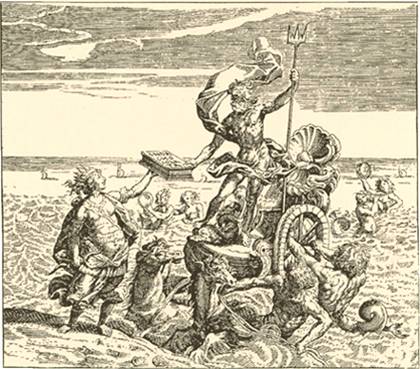
an allegorical image of the New World giving Chocolate to Neptune to take to the Old World
"The divine drink which builds up resistance and fights fatigue. A cup of this precious drink permits man to walk for a whole day without food."
- Hernando Corts, conqueror of the Azteca, 1519
*****
"Ideas should be clear and chocolate thick.
- Spanish proverb
********
"It's strengthening, restorative, and apt to repair decayed strength and make people strong."
- Louis Lmery, French botanist and chemist, 1702
************
Chocolate is here us'd by all People, at all times, but chiefly in the morning; it seems by its oiliness chiefly to be nourishing,and by the Eggs mixt with it to be render'd more so. The Custom, and very common usage of drinking it came to us from the Spaniards, although ours here is plain, without Spice. I found it in great quantities, nauseous, and hard of digestion, which I suppose came from its great oiliness, and therefore I was very unwilling to allow weak Stomachs the use of it, though Children and Infants drink it here, as commonly as in England they feed on Milk. Chocolate colours the Excrements of those feeding on it of a dirty colour. The common use of this, by all People in several Countries in America, proves sufficiently its being a wholesome Food. The drinking of it actually warm, may make it the more Stomachic, for we know by Anatomical preparations, that the tone of the fibres are strengthened by dipping the Stomach in hot water, and that hot Liquors will dissolve what cold will leave unaffected.....
The Trade of Jamaica is either with Europe or America. That of Europe confits in bringing thither Flower, Bisket, Beef, Pork, all manner of Clothing for Masters and Servants, as Osnabergs, blew Cloth, Liquors of all forts, etc. Madera Wine is also imported in great quantities from the Island of that name, by Vessels sent from England on purpose, on all which the Merchant is supposed to Gain generally 50 per cent. Profit. The Goods sent back again, or Exported from the lsland, are Sugars, molf part Muscavados, Indigo, Cotton.wool, Ginger, Piemento All-Spice or Jamaica-Pepper, Fustick-wood, Prince-wood, Lignum Vitae, Arnotto, Log-wood, and the several Commodities they have from the Spaniards of the West-Indies, (with whom they have a private Trade,) as Sarsaparilla, Cacao-Nuts, Cochineal, etc. on which they get considerable Profit....
- Sir Hans Sloane, Natural History of Jamaica , 1725
*****************
"Among the many disorders which the intemperance of mankind has introduced to shorten their lives, one of the greatest, in my opinion, is the use of chocolate."
- Giovanni Batista Felici, physician to the Tuscan court, 1728
**********
The is also to be sold, A very likely Negro Woman, about Twenty Years of age, can do household work and grind chocolate very well; at the above said house
- advertisement, The Boston News-Letter , May 31st, 1733, page 2 .
*************
About the harvest of cocoa, and how to resweatand dry it, so that it can be preserved and shipped to Europe:
Cocoa is good to pick when all the pod have changed color, and when only the little bud underneath has remained green. We go from tree to tree, from row to row, and with forked tools, we make the ripened pods fall to the ground, taking care as to not touch those that are not ripe, or the flowers: for this task, only the most adroit shall be used, with other following them with baskets that pick up the pods from the ground, and who pile them up here and there in the cocoa patch without touching them.
During the months where pods are numerous, harvests happen every fortnight: during the less abundant seasons, we pick from month to month.
If the seeds remain in the pods for more than four days, they would inevitably germinate and spoil; this is why, when from Martinique, cocoa pods were sent to nearby islands which needed seeds to plant, extreme care was taken to harvest only when the ship was ready to set sails, and to use them when they arrived: it is thus impossible that the Spanish who wanted to have seeds to produce these trees had waited for these pods to ripen fully and dry, before extracting the seeds from these pods, and before carefully drying them in the shade, in order to plant them in a tree nursery, as is told by Oexmeli, History of Adventurers, Vol. 1, p. 424 . It is necessary to open the pods in the morning of the fifth day at the latest; in order to do that, a wooden stick is used to hit the middle of the pods, and then the hands finish to prop them open and to pull the almonds that are placed in baskets, throwing back into the cocoa patch the empty pods that will act to enrich the soils in almond and as a fertilizer, when they get rotten, just like the flowers falling off the trees act as perpetual manure.
The cocoa thus obtained is carried into a hut, put into a pile, on a sort of elevated floor covered by balisier leaves, measuring about four feet by twenty inches; then, wrapping the cocoa by boards covered by the same leaves, and by placing them into a type of attic that can contain all the pile of cocoa thus spread, one covers the whole by similar leaves, pressed upon by some more boards: cocoa , piled and covered and wrapped as it is on all sides, becomes increasingly warmer through the fermentation of its insensitive parts, what is termed in these regions resweat .
Cocoa is uncovered every morning and evening, and are allowed in the attic where it is stocked only vigorous farmers that move it and shake it so well with their hands and feet; after which cocoa is covered again with the same leaves and the same boards. This operation goes on every day until the fifth day, when cocoa usually is sufficiently resweat ; something that can be assessed with its color, now much darker and reddish.
The more cocoa resweats, and the more it loses of its depth and its sourness: but if it does not resweat enough, it more sour smells, and sometimes flowers; in order to do well, there is a certain measure to observe that one can only know through habit.
As soon as cocoa has resweat enough, then it is brought in the open air and exposed to the sun so that it can be dried...
The cocoa that comes to us from Caraque is more unctuous and less sour than the one from our islands, and it is preferred in Spain and in France to the latter: but in Germany and in the North, opinions are, according to the rumors, completely different. Many people are mixing half of the Caraque cocoa with half of the island's cocoa, and they claim that the mix is making their chocolate better. It is believed that at heart the difference between cocoas is not that formidable, since it forces to raise or diminish the dose of sugar to temperate the sourness of this fruit. Because it must be thought, as we have already said, that there is only one kind of cocoa , which grows as naturally in the forests of Martinique, as on the coast of Caraque; that the climate of these places is almost the same, and as a consequence the temperature of the seasons remarkable similar, and that there would not between these fruits no inner difference that would be essential.
Concerning the external differences that can be noticed, they can only originate from the varying fecundity of the soils, the varying care given to the culture of the trees, the varying industriousness and application by those that prepare and work on cocoa , from its harvest to its delivery; and maybe even from these three factors altogether; what can be seen in Martinique itself, where there are districts where cocoa would grow better than in others, by the sole difference of the richness in soils, whether they are dry or humid.
Cocoa from Caraque is a little flat, and resembles by its volume and its shape one of our big broad bean; the cocoa from Santo Domingo, from Jamaica, and from the Island of Cuba, generally is larger than the one from the Caribbean. The more the cocoa is big and well fed, the less waste there would after it is roasted and sliced.
Good cocoa must have a rather brown and unicolor skin; and when peeled, the almond has to look full, plump, and smooth; its color, ranging from fairly dark hazelnut on the outside to redder inside; its taste should be sour and astringent, without smelling green or rotten; in a word odorless and without being eaten by worms.
Cocoa is the most oleaginous fruit produced by nature; it has this admirable quality that it cannot go rancid, however old it is, contrary to what all other fruits do that are close to it in quality, like nuts, almonds, kernels, pistachios, olives, etc.
Shipped from America is a cocoa reduced into cylindrical breads of about one pound each; and since this preparation is the first and principal that it undergoes before making chocolate, it seems appropriate to add here how to prepare it.
The Indians, from which the recipe has been taken, did not lay too much store by it; they would roast their cocoa into earthenware pots, then after having dried it from its sweat and crushed it and mashed it between two stones, they would shape it into loaves with their hands.
The Spanish, more industrious than the savages, and today other nations, following their example, are choosing the better cocoa or the most recent. (As cocoa is never so clear, that among the good beans there are some aborted, or some earth, stones, etc, one must, before even using the cocoa, sift these unwanted elements through a sieve that would let them pass while keeping the cocoa beans.) They would put at least two pounds of cocoa in a large iron pan over a clear flame, and would whisk and stir the beans continually with a large spatula, until the almonds are roasted enough to be easily peeled; which one must do one by one, and set them aside, taking extreme care to reject the damaged grains, those rotten, and all the skins of the good ones; because these peelings left amongst the cocoa never dissolve in any liquor, not even in the stomach, and rush to the bottom of chocolate cups, if the cocoa has not been sifted carefully. Workers, in order to expedite this operation faster and to save time, are laying out a heavy tablecloth on a table, and they spread on it the cocoa still hot from the pan, then they use the iron roll over them so that the cocoa pod sins crack and detach; finally, they put everything into a wicker basket until cocoa is completely sifted.
If care was taken to weigh the cocoa at the grocer's, and if it is weighed again after it is roasted and sifted, it will be discovered that there is about one sixth of waste, more or less, depending on the nature and the qualities of cocoa ; meaning, for example, that from thirty pounds bought, there will remain about twenty-five all sifted.
All cocoa being thus roasted and sifted on several occasions, it is put once again to roast in the same iron pan, but over a less intense heat; almonds are to be mixed with a spatula without a break, until they are evenly and optimally roasted; which can be pinpointed thanks to the savory taste and its brown, without being black, color; the skill consists in avoiding both extremities, not to roast them enough or too much, meaning burn them. If they are not enough roasted, they keep a certain harshness in taste that is disagreeable; and if they are roasted until they burn, apart from the sourness and the bad taste they acquire, the process deprive them completely from their onctuosity, and of the best part of their good qualities.
In France, where all these measures are generally ignored, people have come to associate the burnt taste and the black color as required qualities of good chocolate; overlooking the fact that coal for coal it would be as advisable to substitute it with cocoa into the fire. This observation in not only true to reason and common sense: but it is also confirmed by the unanimous agreement from all these who wrote on the subject, and it is even authorized by universal practice in the whole of America....
Properties of cocoa: Cocoa is fairly tempered, rich, and easily digested. It promptly cures dissipated spirits and exhausted energies; it is beneficial to old persons.
Uses of cocoa ; jams and chocolate are made from it, and an oil named cocoa butter can be extracted from it.
From cocoa to jam . We select cocoa beans that are half ripe; almonds should be cleanly subtracted without damaging them, and they are left to soak for a few days in the water of a fountain, which should be changed morning and evening: after pulling them out and drying them, small lemon and cinnamon bark slips can be inserted into them, in the same fashion used to make the Rouen nuts.
Meanwhile, a recipient has been prepared of the most beautiful sugar, but fairly white, meaning that the sugar content is low; and after clarifying and purifying the sugar, it should be taken all boiling away from the flame and cocoa beans should be added to it, where they should soak for twenty-four hours, after which they should be scooped out; and as they dry, another recipient of sugar should be prepared, in a similar way as the old one but with a higher sugar content, where the cocoa beans should soak for another twenty-four hours. This operation is repeated five or six times, each time with a higher sugar content, without putting the cocoa beans over a flame or cooking them in any way. Finally, after preparing a last recipient of sugar, this is poured over the cocoa beans that are carefully drying in a faence pot to better conserve them, and when the syrup is almost cold, a few drops of amber are added.
This jam, that looks very much like the Rouen nuts, is excellent to fortify the stomach without irritating it too much, which means that it can even be given to sick people with a fever....
Cocoa butter . Take roasted and sifted cocoa beans, rolled over a stone; pour this fine paste in a big bowl of boiling water over a clear flame, where it should be left to boil until the water is evaporated; then some new clear water should be added: oil rises to the top, and solidifies into butter as the water warms down. If this oil is not really white, it just needs to be melted into a large bowl of cold water, where it will separate and purify itself from the reddish and earthy parts that remained in it.
In Martinique, this oil has the consistence of butter: but shipped to France, it turns into a fairly hard cheese, that however melts and becomes liquid when exposed to a light heat; it has no particular smell, and has the good quality never to rot. When there was a shortage of olive oil one year, cocoa oil was used during Lent: it has a nice taste, and far from being unpleasant, it contains the most essential and healthy parts of the cocoa .
Since this oil is very anodyne, it is excellent in the body to heal congestion, and to lighten the sharpness of the pain that with the flu irritates the chest. To use it so, the oil is melted, mixed with enough sugar cane, and small bars are made of the mixture, that one should keep as long as possible in one's mouth, letting the bar melt slowly without swallowing it.
Cocoa oil, when taken under certain circumstances, could be even more wonderful against corrosive poisons. It does not have less use for the outside of the body: 1. it is the best and most natural of all creams, and women with dry skin can use to make it gentler and smoother, without it looking shiny or oily. Spanish people from Mexico know this merit very well: but as it hardens too much in France, it is necessary to mix it with Ben oil, or oil made from sweet almonds untouched by the fire.
2. If the ancient tradition that Greeks and Romans had to place ointment on their skins were to be reestablished, there would be no other cream that would better answer the needs that had to conserve body parts by this means, and even to tone the muscles and increase their strength, and to protect them from rheumatisms and from other diseases that afflict them. Such practices have been abandoned owing to the bad smell and the uncleanliness that came with it; but substituting olive oil with cocoa oil, no such inconvenience would occur, because it is odorless, and because it dries on leather; nothing would be more advantageous, especially for older people, than to renew today a custom so condoned by experience throughout Antiquity.
3. Apothecaries must prefer this oil to all others to act as a basis for their apoplectic balms; because all grains rot and because muscadet oil whitened with spiritual wine, still retains a little bit of its natural odor, when cocoa oil does not have such inconveniences.
4. There is no other oil that is cleaner to prevent weapons from rusting, because it contains less water than all the other oils that are used for this purpose.
5. In Islands in America, this oil is mostly used for the healing of hemorrhoids: some use it pure; others, after melting two or three pounds of lead, gather the residue, crush it into powder, sieve it through silk, incorporate it with the cocoa oil, and make a very efficient liniment for this disease.
5. Others with the same intention are using with this oil the powder of woodlouses, Saturn sugar, pompholyxand a touch of laudanum.
Others are using this oil to sweeten the pains of gout, by applying it warm on this part with a compress that is covered with a warm towel. A similar device could be used for rheumatism.
Finally, cocoa oil is an element in the composition of the marvelous plaster, and of the cream against dermatitis.
- Denis Diderot, the Encyclopedia of Diderot and dAlembert , 1752
**************
Chocolate: a type of cake or bar prepared with different ingredients but whose basic element is cocoa. ( See Cocoa ). The beverage made from this bar retains the same name; the cocoa nut originates from the Americas: Spanish travelers established that it was much used in Mexico, when they conquered it around 1520.
Indians, who have enjoyed this beverage since the dawn of time, prepared it in a very simple way: they would roast the cocoa nuts in their clay pots, melt it in warm water and mix the result with some spice; for more mannered people, achiote would be added to add some color to the mixture, while atolle would serve to give it more volume. Atolle is a stew made from corn flour, either spiced up by the Mexicans or whose flavor was enhanced by Spanish nuns or ladies, not with spices, but with sugar, cinnamon, scented oils, amber, musk, etc.... All these ingredients mixed together give this composition so rough an appearance and so wild a taste, that a Spanish soldier once said that it would be more appropriate to the feeding of pigs than to the relish of humans; and that he would never have gotten used to it, if it were not for the shortage of wine that forced him to such a violent alternative, so that he could alternate pure water with something else.
Spaniards, who learned about this beverage from the Mexicans and were convinced, through their own experience that this beverage, though unrefined, was good for the health, set out to correct its defaults by adding sugar, some ingredients from the Orient, and several local drugs that it is unnecessary to list here, as we only know their name and as, from all these extras, only the vanilla leaf traveled to our regions (similarly, cinnamon was the only ingredient that was universally approved) and proved to resist time as part of the composition of chocolate.... The sweet scent and potent taste it imparts to chocolate have made it highly recommended for it; but time has shown that it could potentially upset one's stomach, and its use has decreased; some people who favor the care of their health to the pleasure of their senses, have stopped using it completely.
In Spain and in Italy, chocolate prepared without vanilla has been termed the healthy chocolate ; and in our French islands in the Americas, where vanilla is neither rare nor expensive, as it can be in Europe, it is never used, when the consumption of chocolate is as high as in any other part of the world.
However, as there is still quite a large number of people who favor the use of vanilla, and as it is only fair that we should respect their feeling, we shall use vanilla in the composition of the chocolate , the one that might be the better-prepared and the best overall. We only that that it only might be so; since there are in tastes an infinite variety of opinions, everyone wants their interest to be reckoned with, and one would concede what the other refuses; and even if we were to agree on the ingredients to be mixed, it proves impossible to pinpoint dosages that would be universally accepted; and it should be deemed enough that these dosages suit the highest number of people, thus forming the trend that is most popular.
When the cocoa paste has been well shredded on the stone ( see Article Cocoa ), sugar can be added once it has been filtered through a silk-cloth sifter; the secret to the true proportion of cocoa and sugar is to put equal quantity of both: one could in fact subtract one quarter out of the dosage of sugar, as it might dry up the paste too much, or render it too sensitive to changes in the air, or endanger it even more to the apparition of worms. But that suppressed quarter of sugar must be used when chocolate , the beverage, is being prepared.
Once sugar is well mixed with the cocoa paste, a very thin powder can be added, made with vanilla seeds and cinnamon sticks finely cut and sifted together; this new mixture shall be mixed on the stone; once every ingredient is well incorporated, the mixture shall be poured into chocolatire pots, the shape of which it will take, and where it will harden. When one loves scents, one could add some amber essence into the pots.
When chocolate is made without vanilla, the proportion of cinnamon is of two dragmes for each pound of cocoa; but if one wants to use vanilla, then the dosage of cinnamon should be cut at least in half. As for vanilla, its measurement is arbitrary: one, two, or three drops, even more, for each pound of cocoa, according to one's whim.
Chocolate chefs, to make it feel like they did use a lot of vanilla, resort to the use of pepper, ginger, etc. There exists some people of declared high taste who would not have it any other way; but, as these spices can but only lead to stomach upsets, wise people would shy away from these excesses, and will pay great attention to never enjoy any chocolate whose composition they have not ensured.
Any chocolate made in this fashion has this quality, that if one is in a hurry to go out, or one travels and lacks the time to melt it in a beverage, one could eat one ounce of the bar, and drink right after it, leaving to the stomach to mix that lunch on the go.
In the Caribbean islands, habits are to make pure cocoa bars, without any other ingredients. And when one wants to turn his chocolate into a drink, here how to proceed.
Preparation of the chocolate a la French Islands in the Americas . One shreds the cocoa bars in very thin layers with a knife, or rather with a flat grater, when the bats are dry enough and not greasy; when the desired quantity has been shredded, (for example, four filled teaspoonfuls which would amount to one ounce) two or three sprinkles of cinnamon, through a sifter, can be added, as two teaspoonfuls of powdered sugar.
The mixture is then placed in a dish with a fresh egg, that is both with the yoke and the white; mix well, using a whip until the consistence of liquid honey is reached; then, boiling liquid (water or milk, according to one's whim) can be poured as the stirring continues, so that everything mixes well.
Finally, the dish is put on the stove, or is double-boiled in a caldron filled with boiling water; as soon as the chocolate rises, the dish should be taken away from the heat; and after heavy stirring of the chocolate with the whip, the mixture is poured, in several times, and still well-whipped, in the cups. To heighten the scent, one could add before pouring the mixture a teaspoon of water scented with orange flower, in which one or two drops of amber essences had previously been dissolved.
This way of preparing chocolate has several advantages that are inherent to it, and that makes it preferable to all others.
At first, one can be sure that, if prepared according to the instructions, this chocolate has an exquisite perfume and tastes wonderfully; it is furthermore extremely gentle on your stomach, and leaves no messy residues either in the dish, or in the cups.
Secondly, one may at will prepare it as one fancies, adding more or less sugar and cinnamon, adding or not water scented with orange flower and amber essence; in a word, to make any changes that one would hold for more agreeable.
Thirdly, because nothing was added that could substitute the good qualities of the cocoa nut, the beverage proves to be so neutral that one can enjoy it at any time of the day, however old one might be, in the summer as well as in the winter, without fearing the least problem: whereas chocolate seasoned with vanilla and other sour, spicy ingredients can sometimes be dangerous, especially during the summer for the young and for those with vivacious, dry constitutions. The glass of cool water that one usually drinks before of after the chocolate can only temporarily alleviate the fire that it ignites in the blood and the entrails, once the soothing water has passed along.
Fourthly, this chocolate is so cheap that a cup of it will cost you one sou . If artisans were to learn about this aspect, few would fail to profit from such an easy, gracious, and cheap lunch that needs no other food to accompany it, be it solid or liquid.
- Denis Diderot, the Encyclopedia of Diderot and dAlembert , 1753
***********
"For the Entertainment of Gentlemen, Benefit of Commerce and Dispatch of Business, a Coffee-house is this Day opened in King Street Gentlemen who are pleased to use the House, may at any Time of the Day, after the Manner of those in London, have Tea, Coffee, or Chocolate, and constant Attendance given by their humble Servant, Mary Ballard
- advertisement, Boston Evening Post , December 8, 1755, p.2.
*********
If Columbus in an island of America had not caught the disease, which poisons the source of generation, and often indeed prevents generation, we should not have chocolate and cochineal"
- Voltaire, Candide , Chapter 4, 1759
~
The exhibit of Goya "cartoons" that provided the basis for royal tapestries reopened today at Melioria in the OOC/Entry area. This excellent show, created by Quecay Amat and originally shown in the Palacio de Villafranca on the sim of the Spanish Royal Court of Carlos IV, was just so good that we had to ask to borrow it.  Attendance was very good: it will be up for at least two months in that location
We would be remiss if we did not express our appreciation to the people who made this possible:
Thank you to Quecay and the Court of Carlos IV for agreeing to let us have the exhibit and to add some additional pieces to it; to Dio Kuhr and Sere Timeless for their help with installing the exhibit, and to Sere for her excellent recreation of an 18th Goya tapestry; and thank you to Quecay and Maria Del Carmen Novarro for attending and answeringquestions about the art as well as Spanish history and cultural traditions. Even those of us who had been working on this for a while learned new things.

Everyone is welcome to come and view this exhibit.
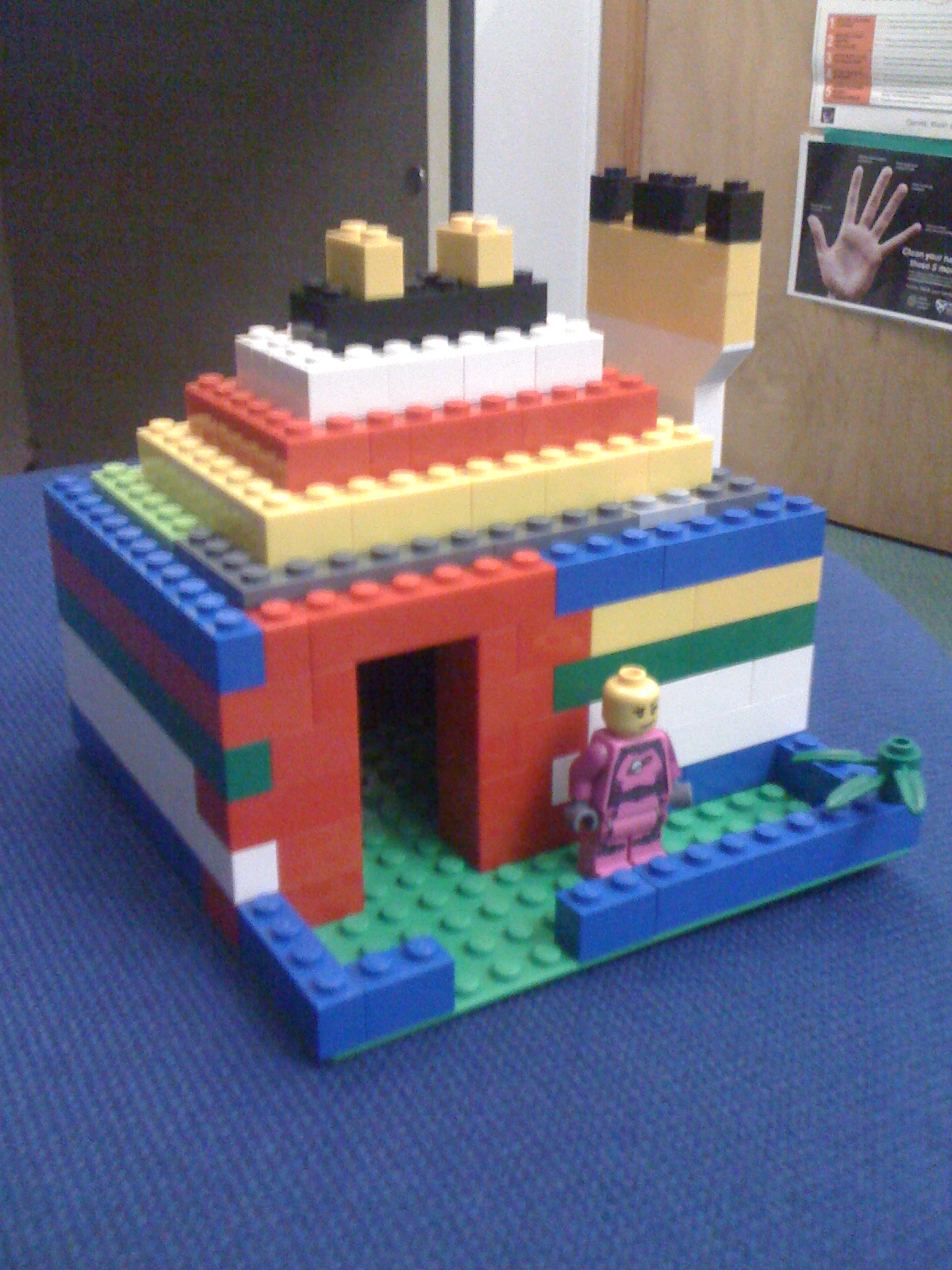
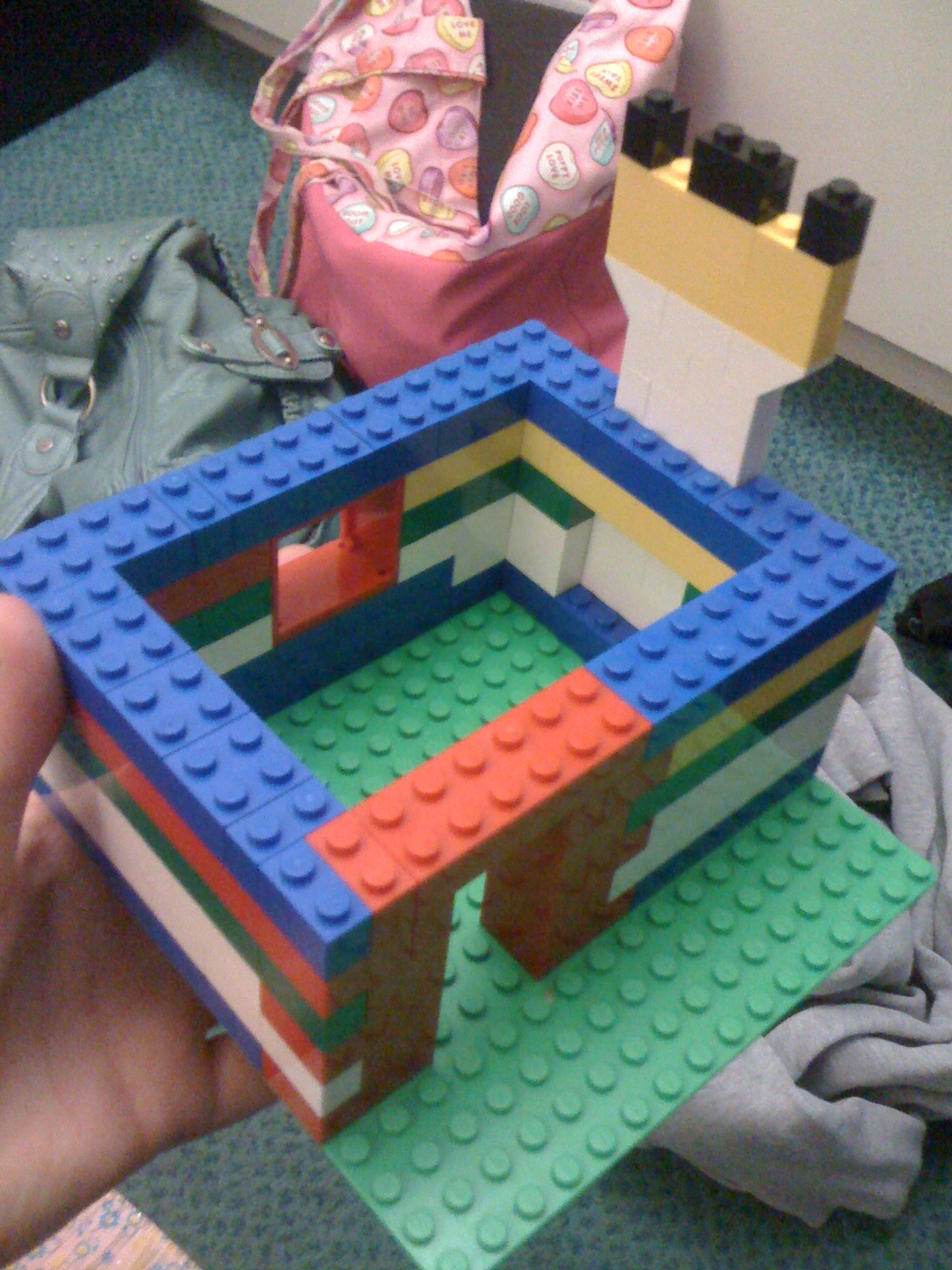
You can take the girl outa sl but you can't take the sl out the girl! Especially when it comes to building 
My 2 hour lego house ^^ totally architectrually sound by using staggered brickwork- all bricks are connected to each other not just staked up so you can poke a wobbly wall in with your finger!, colour co-ordinated with castle detailing around the doors and windows, and with an inbuilt fireplace and fire sourround! Phew! If anyones that intrested, or if i'm bored i just may recreate it in sl! hehe.
Anyway thats my silly blog. I have the building bug =p
....Next Morning......
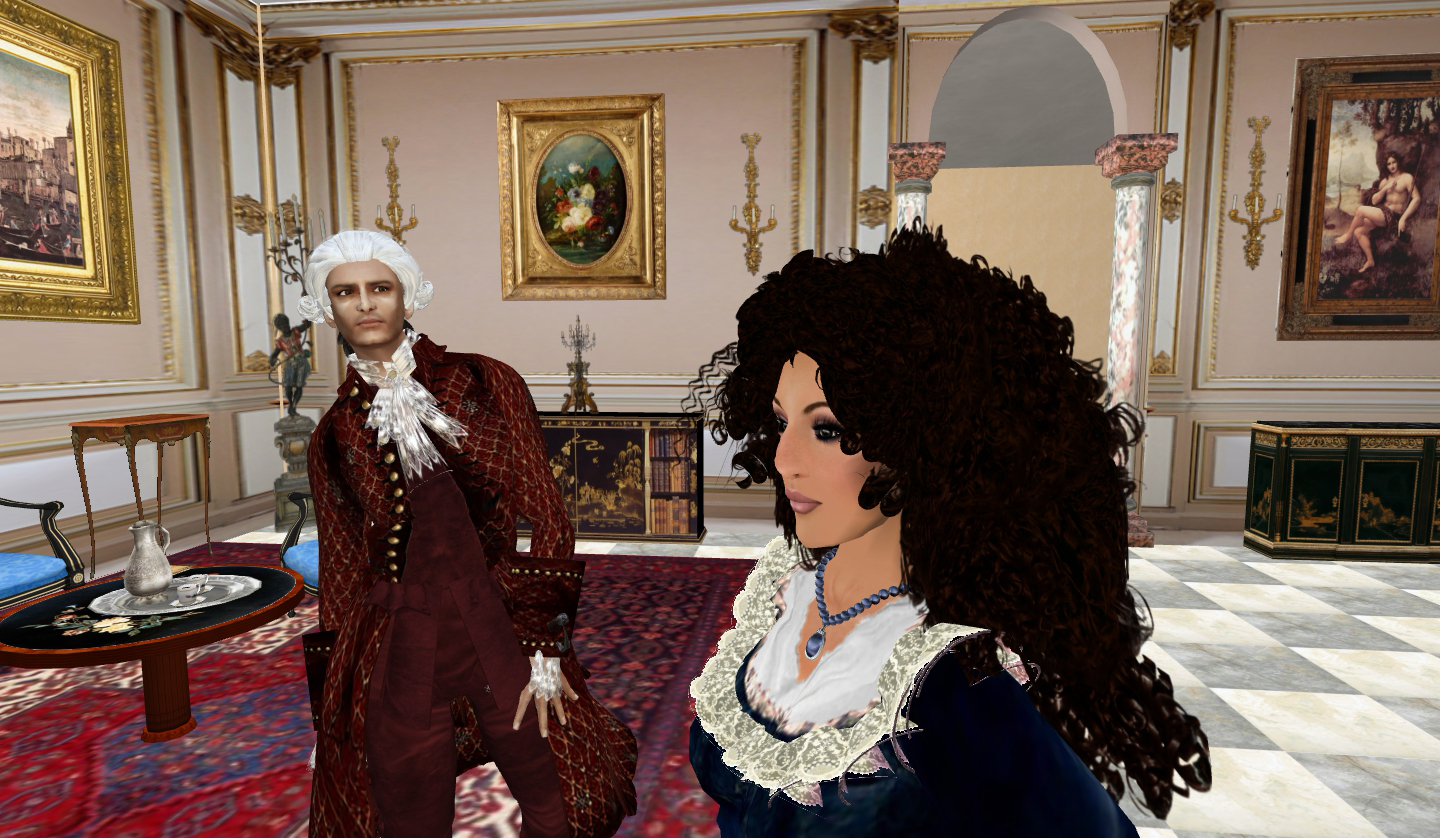
Deep in thought Elena doesnt notice Mercury entering the Salotto, in the hope of sharing late morning coffee with her.
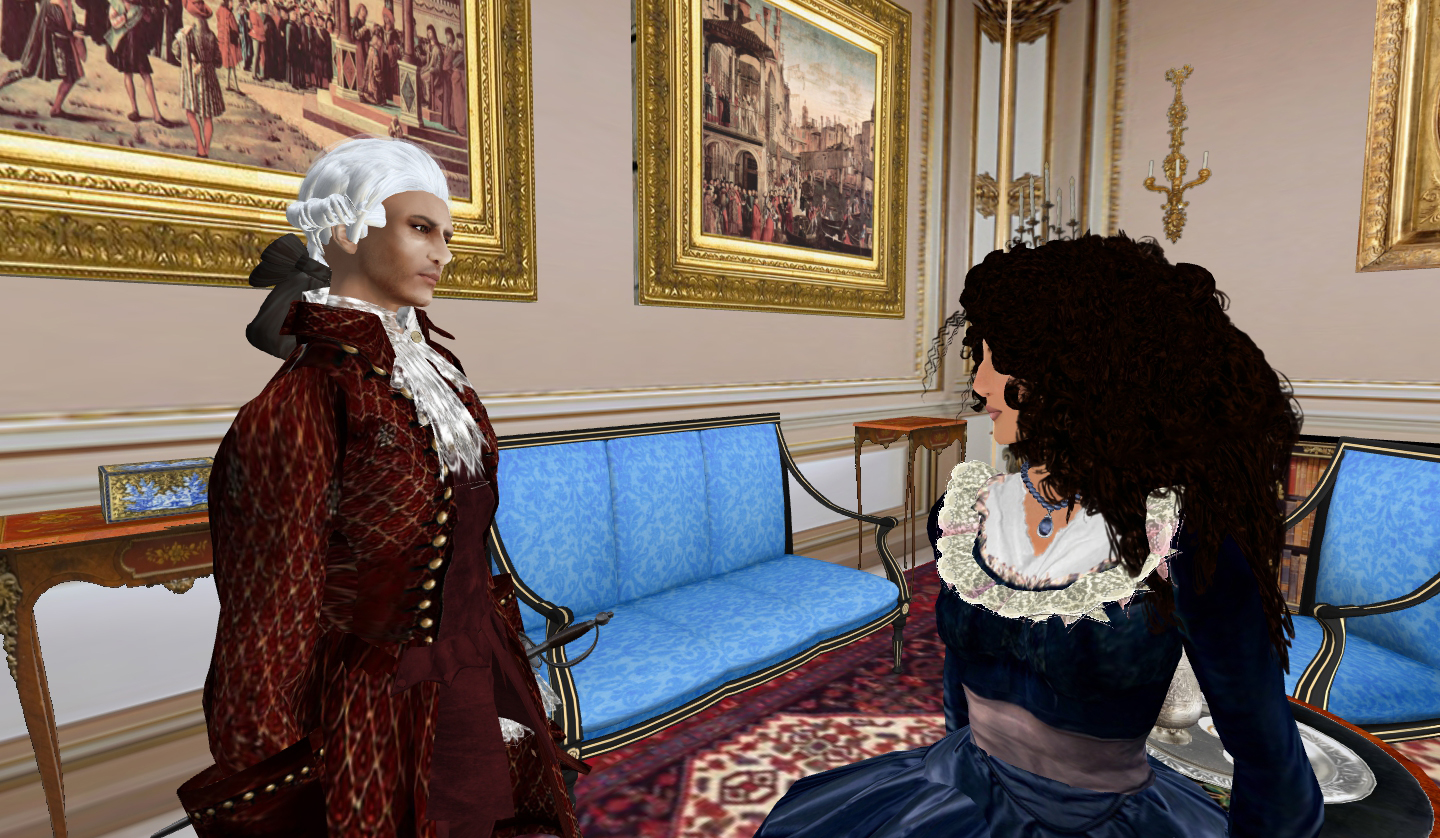
On becoming aware of his presence she smiles sweetly and asks him about his late night Gambling adventures. He seems to be doing well, and is wearing a new smart suit of clothing, and is looking quite the Venetian dandy. He also looks pale and tired.
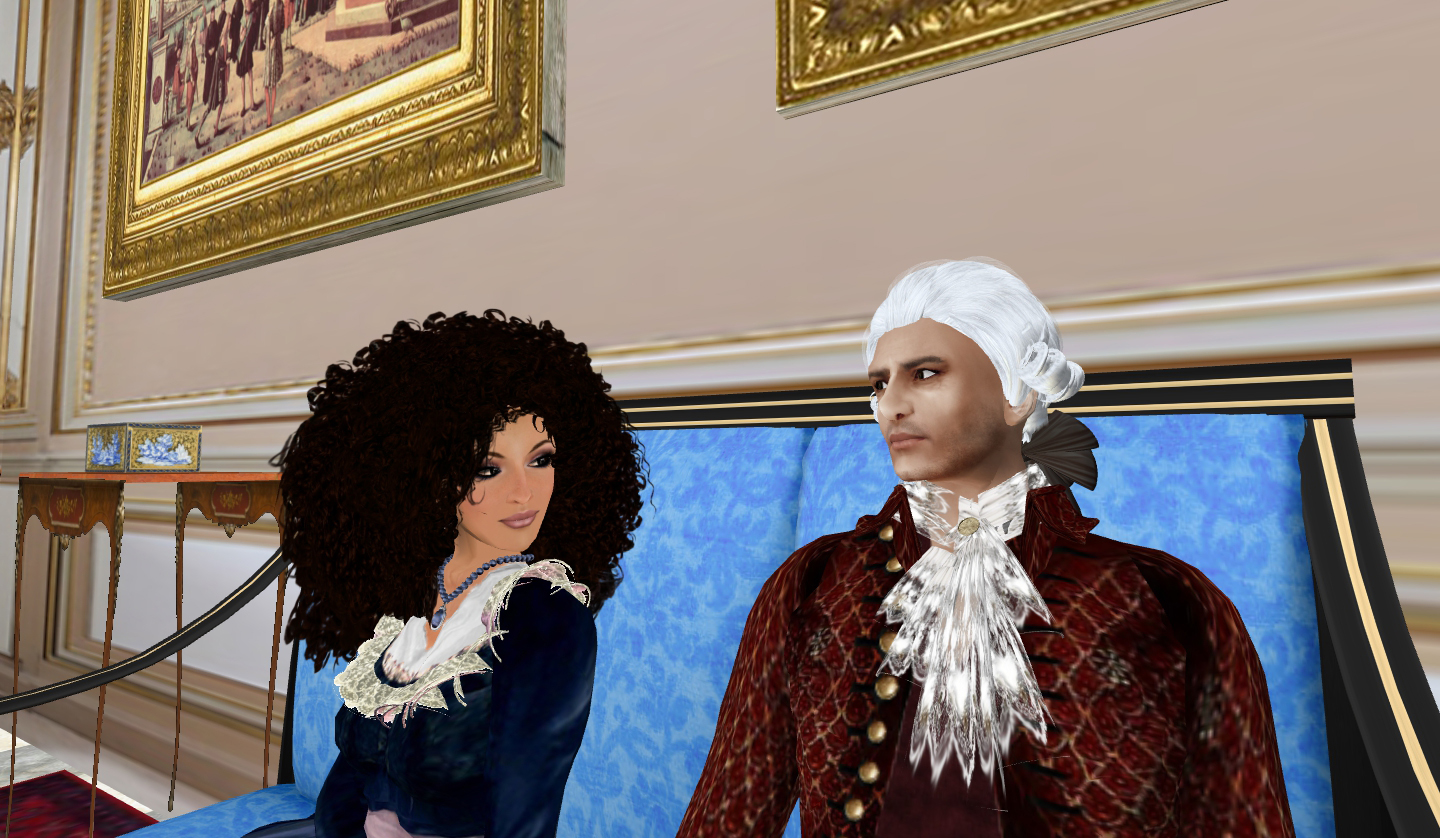
As they sit and drink their coffee, Elena explains that she wishes to visit her dear school friend, Lugrezia Contarini at the Convent of Santa Caterina di Mazzorbo, and wonders if he would mind escorting her, as she is nervous of going out on her own, andbelievesshe is being watched.
She can see that he had other plans, but knows that as a gentleman, staying in her house, he has no real choice but to agree, which of course he does, while she smiles sweetly......

After Achille retires to the kitchens, Elena calls Devi.
Did you hear all that?
Yes of course I did, Devi replies smiling.
Do you think the moment has come? Elena asks her.
Yes I do!
And you know what to do?
Yes of course, I am always prepared. I will make some arrangements, meanwhile you prepare, and I will be back in a while.
Devi turns around and without ceremony hurries from the room.

Grabbing her cloak on the way, Devi comes out the back entrance of Ca Foscari, into the setting sun. Checking that no one is following her, she turns left, then right and disappears into the Calle.

Although she is not Venetian born, Devi prides herself on knowing Venice like the back of her hand, and quickly makes her way to her asignation.

Is it time? asks the man.
Yes. Are you ready? Devi replies, and hands him a well filled purse.
We are always ready he smiles When?
Hopefully tomorrow, I will send word.
The man smiles and pockets the purse.
Any Chance of a kiss? he asks
Devi grins, and starts to leave.
Can you swim? and laughing she disappears down another Calle.

When we think of the great Spanish artist Goya, I suspect many of us immediately think of his brutally graphic "Disasters of War" series. But long before he set to recording the horrors associated with the French occupation of Spain and the Peninsular Wars during the Napoleonic era, Goya was a well-known romantic artist and portraitist, and served as the official court painter of the Spanish Bourbon monarchy. Thanks to information provided the Royal Courts of SL Ning, some some of us became aware the people of the SL spanish court at theVilla del Real Sitio de Aranjuez, Villafranca Palace have assembled an exhibiton of Goya's work from this earlier part of his life. I have now visited the exhibition several times in the company of some good friends, and we all found the show to be appealing, informative and intriguingly thought-providing.
The subject matter of the exhibition is Francisco de Goya's "tapestry cartoons," a set of paintings created by the artist between 1775 and 1792 for the Royal Tapestry Factory of Santa Barbara. These painted "cartoons" were translated by weavers at factory into tapestries that were in many cases hung in rooms of the Spanish royal palaces.
This scenes in the paintings represent country life, hunting, children at play and activities of everyday people. The show is installed in a room in what I believe is the home of Princess Maria Luisa of Borbon-parma, who is also listed on the Ning as the organizer of the exhibition. The exhibition is modest in size (about 15 peices) but as the reproductions of the artwork are large and of good enough quality to facilitate viewing, you may find yourself spending a very long time in the exhibit as we did.
On my first visit to the show I was accompanied by my friend Donna Gabriella-Maria de Gramont, a lady who is possessed of a wonderful ability to examine and discuss art in a manner that goes well beyond superficial appearances. And this is something that you really have to do with this artwork of Goya. There is a great deal more going on in each scene than appears at first glance. For example, when you really look closely at the painting of men playing cards, it initially seems to be a happy, friendly situation. But look at it for a while, study what is actually going on, and you realize that Goya is observing something slightly darker in human nature.

I won't spoil the joke for you, but I will share that Donna Gabriella commented that she felt the painting should be entitled "Fools and Cheats."
I visited the show again on Saturday morning with my old friend, la Baronessa von Khr, a lady with a discerning eye for historical detail. Her observation was that the show provided some very interesting insights into the dress and behaviors of everyday people in late 18th century Spain. We were both extremely intrigued by the series of paintings that represented hunting scenes, of which there are quite a few as hunting was a primary interest of the Spanish king and princes.
 One has the sense that the representations of hunting costume,, equipment and tactics must be relatively accurate, as the royal interest and familiarity with hunting would no doubt meant that Goya's customers would not have been happy if what was shown in the artwork wasn't dead on. Consequently, among other things, we felt like we learned some very significant things about what a hunt in late 18th century Spain was like. In the detail below you will note that the men hunting a wild boar are not using long boar spears, but seem to be working on dispatching the animal with bayonets on their muskets. One may assume they have already fired their pieces and rather than taking time to reload, are attacking with fixed bayonets to finish off the beast, taking a tried-and-true but remarkably dangerous "up close and personal" approach to the task.

The scary reality of what was going on here really struck home when we looked closely at an accompanying painting of some hunters' equipment and noted that Goya clearly depicts the type of bayonet these fellows were using: an obsolete pattern known as the "plug bayonet." I invite you to talk to the Comtesse de Chiverny about the significance of that (as she is one of the few people you will encounter in-world who has direct experience in using a plug bayonet), but what it comes down to is that these are bayonets that do not lock onto the business end of a musket; they are merely inserted into the muzzle and kept in place by friction and good intentions.
 The exhibition is, I think, best viewed with a friend or friends in order to foster conversation. There does not seem to be any kind of interpretive hand-out or notecards given by the images themselves, so context and interpretation is going to be generated by discussion and bit of judicious googling. But after all, that isn't a bad thing, per se, and we all heartily recommend you visit the exhibition.
It will be on view at this location until July 31.
This is an except from my talk I gave at the opening of the Botanical Illustration show.
This is the first time I have ever organized a group exhibition in SL so I really appreciate all the support I have received from everyone in Melioria, especially Candace Ducatillon (my partner in exhibiting), Serenek Timeless, who has helped me with all things promotional, technical and decorative, and Professore Aldo Stern who continues to kindly support all my initiatives on this lovely Mediterranean island.
The reproductions of botanical illustrations that are on display provide you with a very tiny sampling of the work that was produced in Europe in the 15th, 18th and 21st centuries. There are descriptive texts in the form of a note card embedded into each art work. Just click on each and you will get the biography of the artists who produced them.
Botanical illustration has a long tradition in both the arts and sciences and is currently enjoying a resurgence in popularity with artists and collectors. The earliest botanical illustrations date back thousands of years. One of the earliest practical uses of botanical illustration was for identifying plants with medicinal properties. Drawings were gathered in books called herbals and used by physicians in plant-based medicine.
Botanical drawings were also important in the age of discovery. European explorers returned from their voyages to far corners of the world with thousands of plant and seed samples. European landowners were then able to cultivate a wide new range of plants for their gardens, and some commissioned botanical artists to help catalogue, document and publish their burgeoning collections.
For the past two hundred years, the centre of plant science, conservation and botanical illustration has been the Royal Botanical Gardens at Kew, near London, England. Since their early eighteenth century origins, Kews gardens have spread to 300 acres and their living collection of plants is the largest in the world, with representatives of about one in eight plant species.
In North America, the hub for botanical illustrators is the Hunt Institute, part of the Carnegie Melon University in Pittsburgh, PA. The Hunts collection includes over 30,000 botanical illustrations, and it always has an interesting exhibition open to the public .
Nowadays, some botanical gardens around the world employ illustrators, but magazines tend to use photographs. Painters like me who are interested in botanical illustration are likely to be working on their own for pleasure. They may use a wider range of materials than their predecessors colour pencil and sumi ink have been added to the traditions of watercolour and pen and ink but the hallmarks of their work continue to be accuracy in form and colour and attention to detail.
I must draw your attention to Candaces beautiful photographs of plants growing here in Melioria, they expand upon and beautifully complement the illustrations .
Principato di Melioria, Villa Vesuviana, Westphalia (69, 183, 2801)