
Blogs
Historians usually describe the 18 th century as a Golden Age for most of the major and minor Arts, with its admirable achievements, masterworks of architecture, painting, sculpture, music, literature, as well as Grand Style furniture, jewelry, tableware, tapestry, fabrics and of course Fashion. Another Art reigned supreme, though, mainly in France, where the trend was set; but it has left nearly no trace at all, because of its particularly ephemeral nature: the ART OF CONVERSATION, as practiced mostly in Salons.
This unique mix of mastery of language, verbal elegance, charming (or ferocious) wit, quicksilver replies, original insights, refined sense of finely-shaded nuances in the choice of words, charming courtesy towards one another, logic in development of ideas, and fanciful speech, was the epitome of the French-speaking European Civilization in those days.
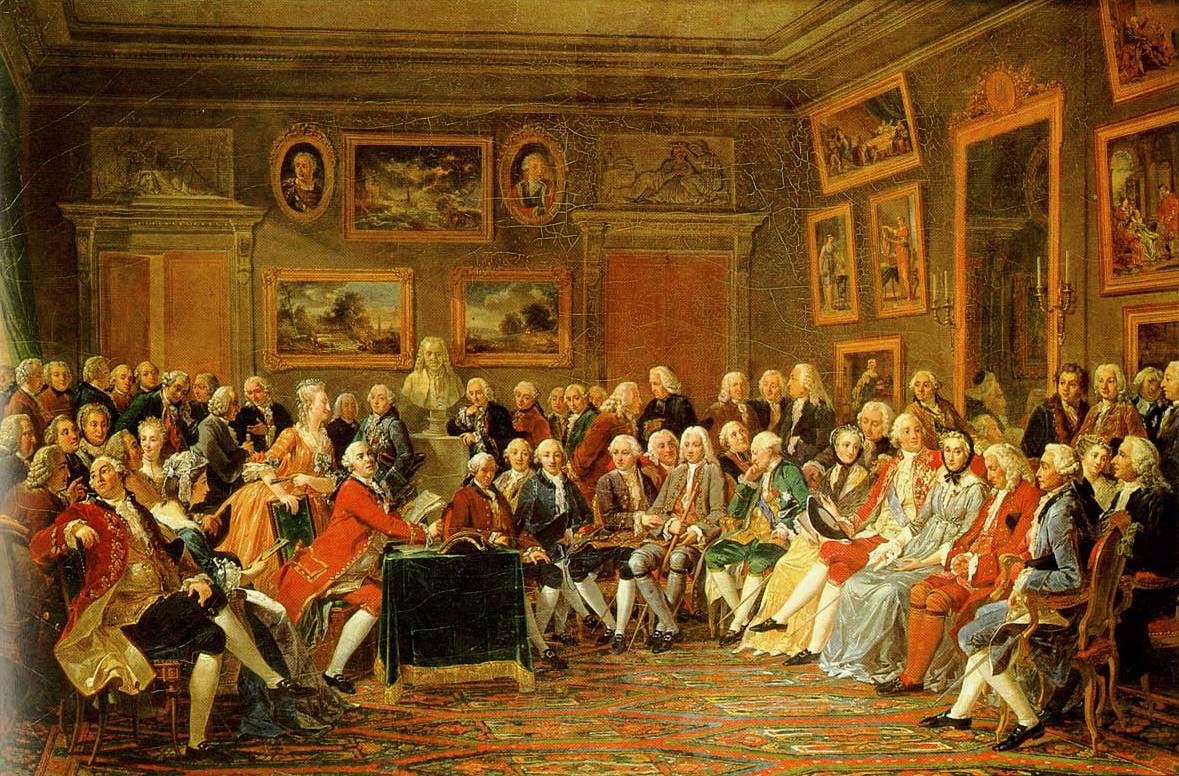
It is our duty as Royal Courts Courtiers to revive it, just as it has been done by Creators in visual arts, with magnificent dresses, gowns and wigs, fabulous carriages and montgolfieres , and awesome chateaux .
We are responsible for keeping this lost Art alive, and I am always happy to contribute to a literary or scientific Salon where profound ideas are exchanged in this most graceful manner of the 1700s.
For those of you who have not yet attended a SL Royal Courts Salon Meeting, I will provide an (imaginary, of course) example. A transcript of the Salon would go like this:
Karl-Heinz Moderator: Ladies and Gentlemen, dear friends, I think we can begin now. We will celebrate this month the 300 th anniversary of Jean-Jacques Rousseau, the famous philosopher, and I thought it a good idea to discuss his life and works.
- Comte de Bourlemou nods
- Lady Marshmallow: Greetings everyone! Hope I am not too late?
-K-H Moderator: Not at all, Madame, please take a seat Socan anyone tell us what he knows about Rousseau?
- Comte de Bourlemou nods
-KH Moderator: Can you be a little more specific, Sir?
-Comte de Bourlemou: He was a Frenchman.
-KH Moderator: yes, he wrote in French Well, actually he was a Swiss, but lived most of his life in France, and
-Arabella Klinkscale: Hellooooo! How are you today?
-Seraphine Percepied: Arabella! where have you been?
- Arabella Klinkscale: * pouts*shopping, what do you think?
-Seraphine Percepied,( in IM to Arabella) : Where did you get this dress, bitch?
-Seraphine Percepied: Ooops, sorry, Monsieur, please go ahead with Rousseau
-KH Moderator: errrrwhat were we saying? Did anyone read a book by Rousseau?
- Comtesse de la Porte de lEscalier de la Cave: Bonjoor Bonjoor! Hi Dears! Did I miss something?
- Comte de Bourlemou: Greetings, Madame
- Lord Myron de Verne: Bonjhpur, Madomee (* my usual typonese*)
- Lady Marshmallow whispers Shhhhhh, sit down and listen, dear Comtesse 
-Lord Myron de Verne: I have read several books by Rousseau
-Comtesse de la Porte de lEscalier de la Cave: (( gorgeous dress, Arabella:-)))
-Lord Myron de Verne:...I had little time to prepare this Salon meeting, and if my English was better, i could tell you more about these books
- Comte de Bourlemou shakes his head
- Graf von Strumpf: Meine Damen und Herren!
- Graf von Strumpf bows
- Lady Marshmallow: Oh! Strumpfy! What brings you here? I did not know you were interested in French Enlightenment?
- Graf von Strumpf: Donnerwetter! Bullshit! I came here for the liquors!
- Graf von Strumpf smiles brightly
- KH Moderator: so, lets sum up what we said Rousseau was a Swiss, born in Geneva Switzerland was in those days- and still is- a confederation of free states or Lnder, a very advanced democracy, some sort of Republic
-Arabella Klinkscale: I loooove Geneva! Very clean city, a big big big lake, with a lovely big big fountain spray in the middle
-Graf von Strumpf: Ach Ja! Eine echte demokratische Republik damals,but darn Calvinist puritans, the Swiss!
-KH Moderator: you made a point, dear Graf, but lets not get too far away from our subject, though
- Principessa della Zuppa al Pomodoro creeps in silently but with majesty
- Comte de Bourlemou stands up and bows to the Principessa
- Graf von Strumpf stands up, clicks his heels ( schlagt seine Hacken zusammen), and bows even deeper
- Lord Myron de Verne stands up ( or rather jumps up like a devil out of a box, and finds himself standing on the nearby table, stomping the cakes and drinks)
- Lord Myron de Verne bows deeply to the Principessa (while still standing on the table)
- Lord Myron de Verne: Please take my seat, Principessa!
- Principessa della Zuppa al Pomodoro: awww thank you, Gentlemen, Je vous pray de reste seated , Messiours!
(KH Moderator rezzes a seat for la Principessa - and it happens to be a yellow and pink polka-dotted beanbag, which she overlooks with disdain)
-Long silence, public chat box remains empty-
-KH Moderator: So Rousseau may have been heavily influenced by his natal country, though he rejected it later and was himself rejected by
- Comte de Bourlemou: I am sorry, RL calls, I have to leave, A bientt!
- KH Moderator: See you soon, Monsieur
- Comte de Bourlemou nods
-Arabella Klinkscale: Me too! ((Gotta feed the kitty! ))
- Arabella Klinkscale giggles
- Lord Myron de Verne: I could try to translate some of Rousseau books for you , if you care for instance, Les Confessions, la Nouvelle Helose 2400 pages in all, if you are not in a hurry
- KH Moderator: Thank you, but they are already translated, Milord
- Lord Myron de Verne lurks, and looks at Lady Marshmallow, head and arms down, with an Away tag above her
- Seraphine Percepied: can I upload them for free in my Kindle?
-Principessa Della Zuppa al Pomodoro: May I have some of these cupcakes? They look delicious!
- Comtesse de la Porte de lEscalier de la Cave: personally, I prefer Voltaire
-Graf von Strumpf: Where are the liquors?
-Principessa Della Zuppa al Pomodoro: OMG! Is it THAT late? How time flies in your company! I have to rush back home, Ciaoooo!
- Graf von Strumpf clicks heels four times, turning east , west, north and south, and thanks the audience for the very interesting discussion ( * poofs*)
(Lord Myron de Verne crashes for the third time and does not come back)
-KH Moderator, staying alone with Lady Marshmallow who is afk: Well, Ladies and Gentlemen, its been a pleasure and a privilege to share these enlightening moments with you.
For our next Salon meeting, we will discuss the progress of science , most notably the steam engines.
( End of transcription)
I am proud I took my share in this remarkable experiment: of course, all this needs some polishing, but it is really comforting to see how we, Second Life Royal Courts members, strive to resuscitate the dead art of conversation, in all its brilliance and purity.
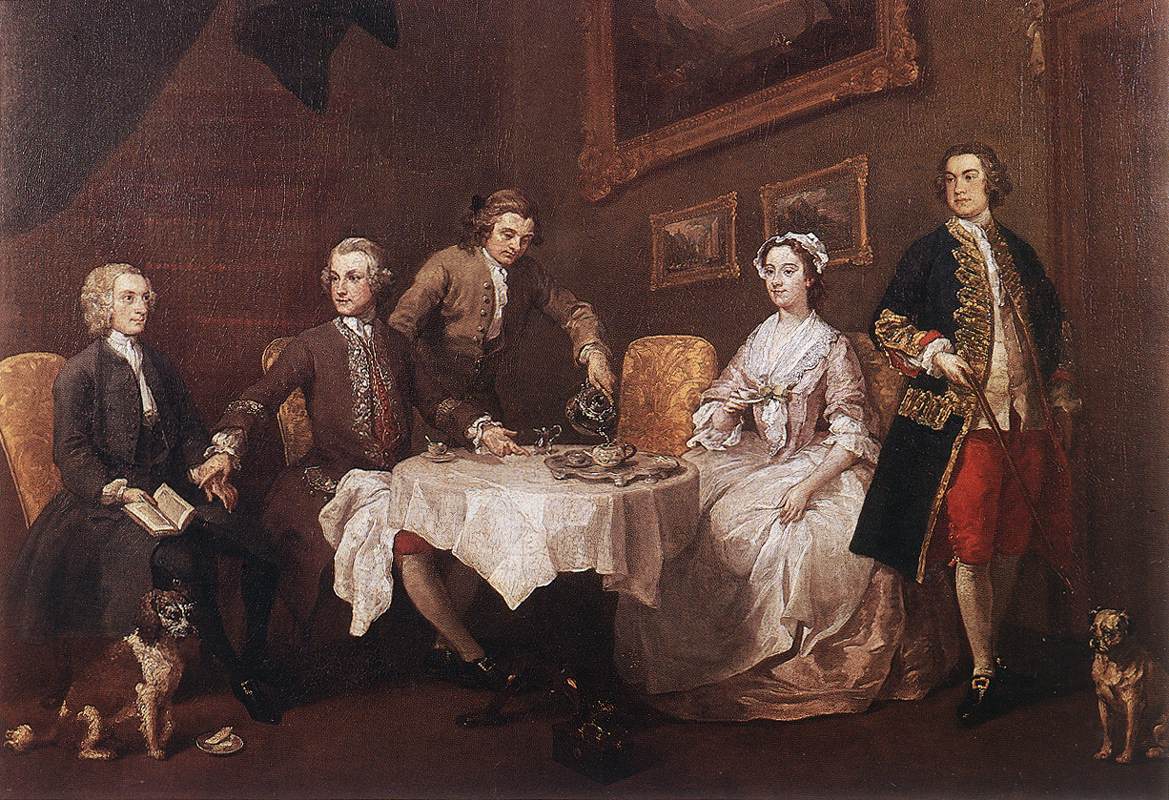
The Accademia di Melioria held its first open poetry reading today. The experiment proved quite successful, with a diverse group of literary enthusiasts sharing poems (both in chat and in Voice), written by authors from a variety of time periods and nations.
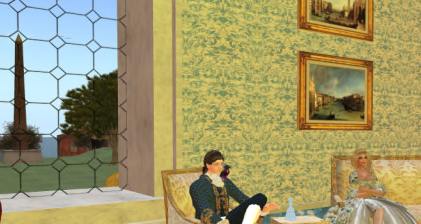 The small group of friends who attended enjoyed themselves reading and discussing pieces they had brought. In addition to some poems from outside the time period of the Enlightenment (Petrarch and Beaudelaire), a number of 17th and 18th century works were shared among the group.
Below are are some of those that were read:
The Tarentina Girl, by Andre' Chenier (France, late 18th century)
Weep, sweet halcyons, O you sweet holy birds,
You love birds of Thetis, sweet halcyons, do weep.
She was alive, Myrto, the Tarentina girl,
A board a ship to Camarina shores:
There a wedding, songs and flutes , slowly
Were to lead her back to her lovers threshold.
A careful key for this journey had locked
In a cedar box her wedding dress,
and gold she was to wear for the ceremony,
and perfumes meant for her blond locks.
But alone at the prow, wishing on the stars,
An ill wind blowing in the sails wrapped her up.
Abashed, and afar from sailors,
She cries, she falls, she lays within the waves.
She lays within the waves, the Tarentina girl.
Her body so fair has rolled under the surf,
Thetis, eyes in tears, took care to hide her
From devouring sea monsters, in a caves shelter .
Soon, by her order, the dainty Nereids
Lift her above these damp hollows,
Carry her to the shore, at Zephyr cape,
And there gently lay her by this burial mound.
Then shouting loud in the distance, calling their friends
And the Nymphs of the woods, and springs, and mountains,
All beating their own breasts in long mourning,
Go repeating Alas! around her grave.
Alas! To your lover no one brought you back,
You ll never wear your wedding dress,
Gold jewels were not fastened around your arms,
And sweet perfumes did not embalm your hair
Weep, sweet halcyons, O you sweet holy birds,
You love birds of Thetis, sweet halcyons, do weep.
**************
Stellas Birthday 1718, by Jonathan Swift (Ireland, early 18th century)
Stella this day is thirty-four
(We shan't dispute a year or more)
However, Stella, be not troubled,
Although thy size and years are doubled
Since first I saw thee at sixteen,
The brightest virgin on the green.
So little is thy form declined;
Made up so largely in thy mind.
Oh, would it please the gods to split
Thy beauty, size, and years, and wit,
No age could furnish out a pair
Of nymphs so graceful, wise, and fair:
With half the lustre of your eyes,
With half your wit, your years, and size.
And then, before it grew too late,
How should I beg of gentle fate,
(That either nymph might lack her swain),
To split my worship too in twain.
******************
Green Grow the Rashes, Robert Burns, (Scotland, 18th century)
| Chor. - Green grow the rashes, O; Green grow the rashes, O; The sweetest hours that e'er I spend, Are spent amang the lasses, O. There's nought but care on ev'ry han', In ev'ry hour that passes, O: What signifies the life o' man, An' 'twere na for the lasses, O. Green grow, &c. The war'ly race may riches chase, An' riches still may fly them, O; An' tho' at last they catch them fast, Their hearts can ne'er enjoy them, O. Green grow, &c. But gie me a cannie hour at e'en, My arms about my dearie, O; An' war'ly cares, an' war'ly men, May a' gae tapsalteerie, O! Green grow, &c. For you sae douce, ye sneer at this; Ye're nought but senseless asses, O: The wisest man the warl' e'er saw, He dearly lov'd the lasses, O. Green grow, &c. Auld Nature swears, the lovely dears Her noblest work she classes, O: Her prentice han' she try'd on man, An' then she made the lasses, O. Green grow, &c. |
***************
A Rebus, Henry Livingston, (America, late 18th century)
| Take the name of the swain a forlorn witless elf | |
| Who was chang'd to a flow'r for admiring himself. |  |
| A part deem'd essential in each lady's dress: | |
| With what maidens cry, when they wish to say yes. | |
| A lullabye carriage soft cozy & light: | |
| With the name of the poet who sang on the night.
| |
| The queen of Cairo, all lovely and winning | |
| Whose blandishments ever kept Antony grinning. | |
| The flow'r whose odours unremittingly please: | |
| With the glory of forests, the king of the trees. | |
| To the prince of the fairies, a jealous old knave, | |
| Put the name of the tree that undid mother Eve. | |
| To finish the whole add that period of day, | |
| When the linnet & thrush to repose hie away. | |
The initials of these, if adjusted with care,
Will show you the fairest where thousands are fair.
The sweet, pretty graces still hover about her,
And Cupid would die with vexation without her.
When she swims in the dance or wherever she goes
She's crowded by witlings, plain-fellows & beaux
Who throng at her elbow & tread on her toes.
If a pin or a hankerchief happen to fall
To seize on the prise fills with uproar the hall:
Such pulling and hawling & shoving & pushing
As rivals the racket of 'key & the cushion;'
And happy- thrice happy! too happy! the swain
Who can replace the pin or bandana again.
Tho the fellows surround & so humbly adore her
The girls on the contrary cannot endure her;
Her beauty their beauty forever disgraces
And her sweeter face still eclipses their faces.
For no lov'ly girl can a lov'ly girl bear
And fair-ones are ever at war with the fair.
I am having trouble creating notecards in SL (asset server threw up, I think). Therefore I am posting the readings here so that people can see them, in the unlikely event that SL stays broken.
****************************************
"Humor. The English use this word to describe original, surprising and unusual wit. Among this nations authors, none had as much humor, or this original form of comic expression, as Swift, who, by the form he gave to his jokes, sometimes produced effects on his compatriots that you would not expect from reading serious and closely reasoned works. Ridiculum acri , etc ( A joke often decides... Horace, Satires , Book I, Chapter 10). So in advising the English to eat the little children of Ireland with cauliflower, he caused the British government to re-examine its position at a time when they were preparing to deprive the Irish of the last resources of trade that they had left. The title of this pamphlet is A Modest Proposal for Preventing the Children of Poor People in Ireland from Being a Burden to Their Parents or Country, etc. Another of Swifts works, Gullivers Travels , is a satire brimming with humor . In a similar style is Swifts joke in which he predicted the exact date of death of Partridge, the author of almanacs. At the foreseen date, Swift attempted to prove to Partridge that he was indeed dead, despite the latters protests to the contrary. In fact the English are by no means the only people who have had their fair share of humor . Swift took a good deal of inspiration from the works of Rabelais and Cyrano de Bergerac. Count Grammonts Memoirs are full of humor and can be considered as a masterpiece of the genre. We could even say that generally this form of comedy is more a property of the light and merry spirit of the French than the serious and rational turn of mind of the English."
-- Author unknown, "The Encyclopedia of Diderot and D'Alembert, " 1765
***********************************
"A Man being very much diseased and weak, was bemoaning himself to hs only Son, whom he loved very well: For, Jack, says he, if I stand, my egs ach; if I kneel, my Knees ach; if I go, my Feet ach; if I lie, then my Bak achs; if I sit, my Hips ach; and if I lean, my Elbows ach. Why truly Father, says he (like a good dutiful Child) I advise you to hang yourself for an Hour or two, and if that does not do, then come to me again."
From "Coffee-House Jests," 1760
*****************
"An arch Rogue meeting a blind Woman who was crying Puddings and Pies, taking her by the Arm said Come along with me Dame, I am going to Moorfields, where this Holliday-time, you may Chance to meet with good Custom. Thanke kindly, Sir, says she. Whereupon he conducted her to Cripplegate Church, and placed her in the middle Isle. Now, says he, you are in Moorfields: which she believing to be true, immediately cried out, Hot Puddings and Pies! Hot Puddings and Pies! come their all Hot! &c. which caused the whole Congregation to burst out in a loud Laughter, and the Clerk came and told her she was in a Church: You are a lying son of a Whore, says she. Which so enraged the Clerk, that he dragged her out of the Church: she cursing and damning him all the while, nor would she believe him till she heard the Organs play."
From The Merry Miscellany, undated mid-18th century British jestbook
***************
"A deaf Man was selling of Pears at the Towns End in St Giless, and a Gentleman riding out of Town, asked him what it was oClock?
He said, "Ten a Penny, Master."
Then he asked him again, "what it was oClock?"
He told him, Indeed he could afford no more.
"You Rogue," says the Gentleman, "Ill kick you about the Streets."
Then says the Man, "Sir, if you wont, another will."
From Coffee-House Jests, 1760
***************
"A young Man married to an ill-temperd Woman, who not contented,tho he was very kind to her, made continual Complaints to her Father,to the great Grief of both Families; the Husband, no longer able to
endure this scurvy Humour, bangd her soundly: Hereupon shecomplaind to her Father, who understanding well the Perverseness ofher Humour, took her to Task, and lacd her Sides soundly too; saying,Go, commend me to your Husband, and tell him, I am now even withhim, for I have cudgelld his Wife, as he hath beaten my Daughter."
From Joe Millers Jests: Or, The Wits Vade-Mecum, an undated mid-18th century British jestbook
***************
A Woman prosecuted a Gentleman for a Rape; upon Trial the Judge askd her, if she made any Resistance?
"I cryd out, ant please your Lordship," said the Woman.
"Ay," said one of the Witnesses, "but that was nine Months after."
From The Nut-Cracker, 1751
****************
A young gentleman was caught defecating in St. Pauls Churchyard, with his face to the wall and his backside in full view. When asked why he couldnt turn the other way, he explained, "for thats the Way to be seen: every Body knows my Face, and no Body knows my Ase . . ."
From The Merry Medley. 1745
*****************
"The lord Mohun and the earl of Warwick being on the ramble, theytook notice of an old woman, who early and late was boiling codlings [apples] near Charing-cross; one day they bought some of her, pitied her poverty, and promised to send her a bushel of charcoal for nothing. I thank your honours, replied the old woman. In the morning a porter brings a bushel of charcoal, at which the old woman was very joyful: but their lordships had filled up the hollow of the charcoal withgunpowder, and sealed up the ends with black wax and stood at adistance to see the effect of their project. The old womans fire beginning to decay, she supplied it with the charcoal which was sent her. In a little time, bounce went the charcoal like so many crackers, down went the kettle into the street, and away flew the codlings about the old womans ears; and she getting no hurt, their lordships were well pleased with the frolick."
From Joaks Upon Joaks, undated mid-18th century British jestbook
****************************************************
"MILITARY glory is at most but one half of the accomplishments which distinguish heroes. Love must give the finishing stroke, and adorn their character by the difficulties they encounter, the temerity of their enterprises, and finally, by the lustre of success. We have examples of this, not only in romances, but also in the genuine histories of the most famous warriors, and the most celebrated conquerors.
The Chevalier de Grammont and Matta, who did not think much of these examples, were, however, of opinion, that it would be very agreeable to refresh themselves after the fatigues of the siege of Trino, by forming some other sieges, at the expense of the beauties and the husbands of Turin. As the campaign had finished early, they thought they should have time to perform some exploits before the bad weather obliged them to repass the mountains.
They sallied forth, therefore, not unlike Amadis de Gaul, or Don Galaor, after they had been dubbed knights, eager in their search after adventures in love, war, and enchantments. They were greatly superior to those two brothers, who only knew how to cleave in twain giants, to break lances, and to carry off fair damsels behind them on horseback, without saying a single word to them; whereas our heroes were adepts at cards and dice, of which the others were totally ignorant.
They went to Turin, met with an agreeable reception, and were greatly distinguished at court. Could it be otherwise? They were young and handsome; they had wit at command, and spent their money liberally. In what country will not a man succeed, possessing such advantages? As Turin was at that time the seat of gallantry and of love, two strangers of this description, who were always cheerful, brisk, and lively, could not fail to please the ladies of the court.
Though the men of Turin were extremely handsome, they were not, however, possessed of the art of pleasing. They treated their wives with respect, and were courteous to strangers. Their wives, still more handsome, were full as courteous to strangers, and less respectful to their husbands."
-- Philbert, Comte de Grammont, "the Memoirs of Count Grammont." 1713
**************************
Blessed is he who expects nothing, for he shall never be disappointed.
***
Certainty? In this world nothing is certain but death and taxes.
***
Wise men don't need advice. Fools won't take it.
***
Content makes poor men rich; discontentment makes rich men poor.
***
God heals and the doctor takes the fee.
***
Guests, like fish, begin to smell after three days.
***
He that falls in love with himself will have no rivals.
***
If you would know the value of money try to borrow some.
***
Keep your eyes wide open before marriage, and half-shut afterwards.
***
Were it offered to my choice, I should have no objection to a repetition of the same life from its beginning, only asking the advantages authors have in a second edition to correct some faults in the first.
***
Here comes the orator with his flood of words and his drop of reason.
***
He that is of the opinion money will do everything may well be suspected of doing everything for money.
-- Dr. Benjamin Franklin, various dates
*************************************************
The secret of being a bore is to tell everything.
***
A witty saying proves nothing.
***
All men are born with a nose and ten fingers, but no one was born with a knowledge of God.
***
All murderers are punished unless they kill in large numbers and to the sound of trumpets.
***
All styles are good except the tiresome kind.
***
An ideal form of government is democracy tempered with assassination.
-- Voltaire, various dates
**************************
"I wish either my father or my mother, or indeed both of them, as they were in duty both equally bound to it, had minded what they were about when they begot me; had they duly consider'd how much depended upon what they were then doing;that not only the production of a rational Being was concerned in it, but that possibly the happy formation and temperature of his body, perhaps his genius and the very cast of his mind....Pray my Dear, quoth my mother, have you not forgot to wind up the clock?Good G..! cried my father, making an exclamation, but taking care to moderate his voice at the same time,Did ever woman, since the creation of the world, interrupt a man with such a silly question?...Then, let me tell you, Sir, it was a very unseasonable question at least,because it scattered and dispersed the animal spirits, whose business it was to have escorted and gone hand in hand with the Homunculus, and conducted him safe to the place destined for his reception....
I was begot in the night betwixt the first Sunday and the first Monday in the month of March, in the year of our Lord one thousand seven hundred and eighteen. I am positive I was.But how I came to be so very particular in my account of a thing which happened before I was born, is owing to another small anecdote known only in our own family, but now made publick for the better clearing up this point.
My father, you must know....was, I believe, one of the most regular men in every thing he did, whether 'twas matter of business, or matter of amusement, that ever lived. As a small specimen of this extreme exactness of his, to which he was in truth a slave, he had made it a rule for many years of his life,on the first Sunday-night of every month throughout the whole year,as certain as ever the Sunday-night came,to wind up a large house-clock, which we had standing on the back-stairs head, with his own hands:And being somewhere between fifty and sixty years of age at the time I have been speaking of,he had likewise gradually brought some other little family concernments to the same period, in order, as he would often say to my uncle Toby, to get them all out of the way at one time, and be no more plagued and pestered with them the rest of the month.
It was attended but with one misfortune, which, in a great measure, fell upon myself, and the effects of which I fear I shall carry with me to my grave; namely, that from an unhappy association of ideas, which have no connection in nature, it so fell out at length, that my poor mother could never hear the said clock wound up,but the thoughts of some other things unavoidably popped into her head& vice versa:Which strange combination of ideas, the sagacious Locke, who certainly understood the nature of these things better than most men, affirms to have produced more wry actions than all other sources of prejudice whatsoever."
-- Laurence Sterne, "Tristram Shandy," 1759
**********************
"Reader, I think proper, before we proceed any further together, to acquaint thee that I intend to digress, through this whole history, as often as I see occasion, of which I am myself a better judge than any pitiful critic whatever; and here I must desire all those critics to mind their own business, and not to intermeddle with affairs or works which no ways concern them; for till they produce the authority by which they are constituted judges, I shall not plead to their jurisdiction."
Henry Fielding, "The History of Tom Jones, a Foundling," 1749
****************************
A crown is merely a hat that lets the rain in.
***
A German singer! I should as soon expect to get pleasure from the neighing of my horse.
***
My people and I have come to an agreement which satisfied us both. They are to say what they please, and I am to do what I please.
-- Frederick the Great, various dates
****************************
As long as I don't write about the government, religion, politics, and other institutions, I am free to print anything.
Drinking when we are not thirsty and making love at all seasons, madam: that is all there is to distinguish us from other animals.
I hasten to laugh at everything, for fear of being obliged to weep.
***
If a thing isn't worth saying, you sing it.
***
It is not necessary to understand things in order to argue about them.
Vilify, Vilify, some of it will always stick.
-- Pierre de Beaumarchais, various dates
****************************
Peachum : ''Do you think your mother and I should have lived comfortably so long together, if ever we had been married? Baggage!''
-- John Gay, "the Beggar's Opera," 1728
Diary of a Contessa, Venezia June 17th, Year of our Lord 1781

I was reading in the Salotto, when my maid Devi came to tell me that there was a man called Achille with a message from Melioria. I remembered that Achille was in the service of Sior Stern, and told Devi to show him up immediately.

Achille explained that he was bringing a Verbal message from my Father and Sior Stern. Verbal because neither of them trusted the written word, or the pigeons.
It would seem that my father had been sent a message which he had assumed was from me, asking him to come to Melioria, as I was in trouble. He arrived in all haste, and off course found I had left because of the message I received from him requesting me to return to Venice as soon as possible.
It would seem that both messages were false, and certainly explains why Father wasnt here when I arrived.......and now I am worried, Sior Gandt suggested there was something suspicious in my Father not being here, I thought he was being silly, seeing dangers everywhere, now I wonder.....

And I dont feel at all reassured when Achille points out that the house is being watched, and shows me the two men watching. By myself I would never have noticed. From now on I shall see them everywhere. My Fathers instructions,however, are to stay put and not to travel anywhere until I hear from him again.
I thank Achille and send him to the kitchens for refreshments.

So while I pretend to gaze across the Canal Grande, but actually observe the two men observing me, I wonder what is going on. Who is having me watched? And why? and what can I do? Father can't seriously expect me to do nothing and just sit here waiting?
(furnishings by Delos Helstein and SERENYA Burnstein)
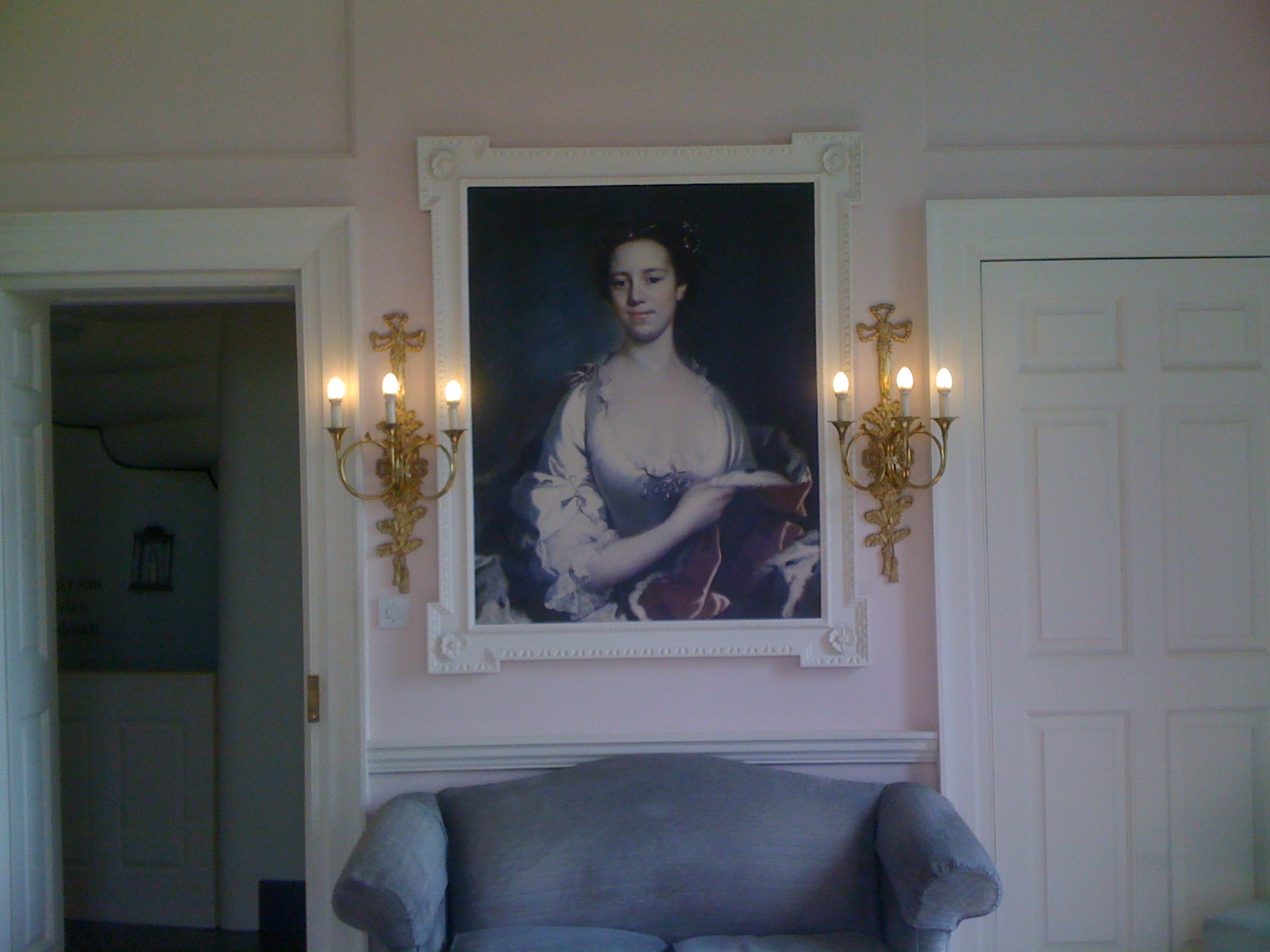
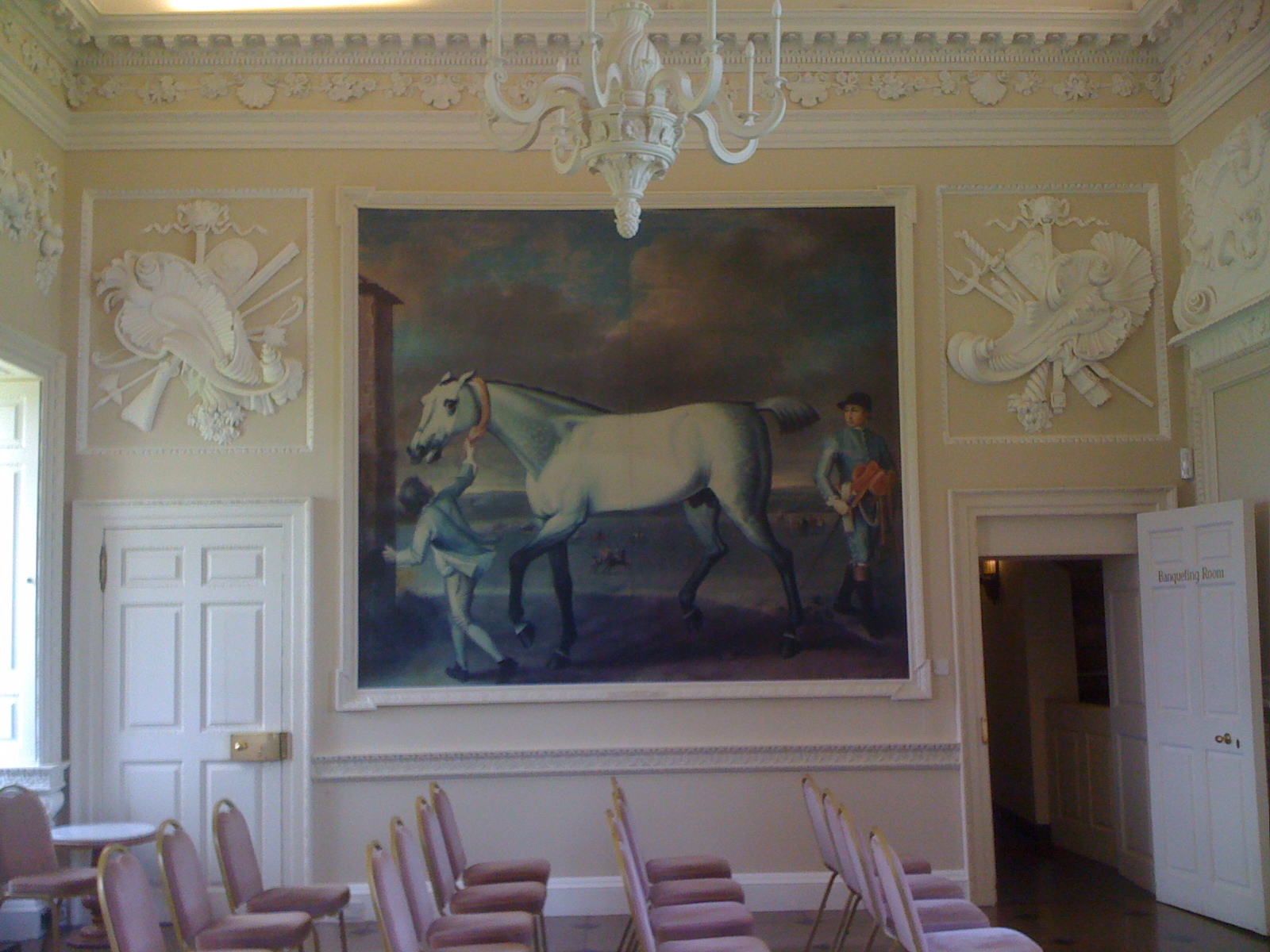
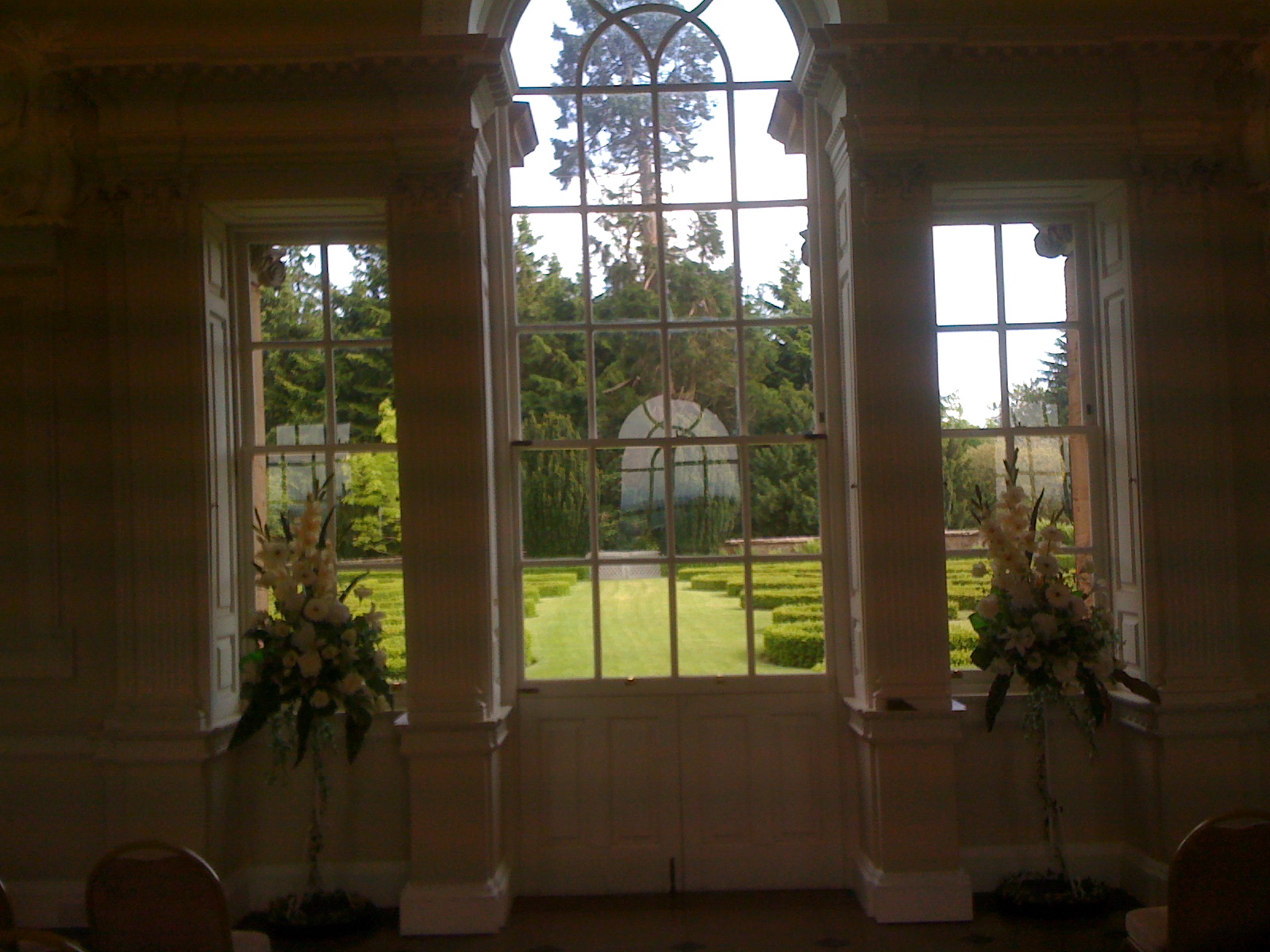
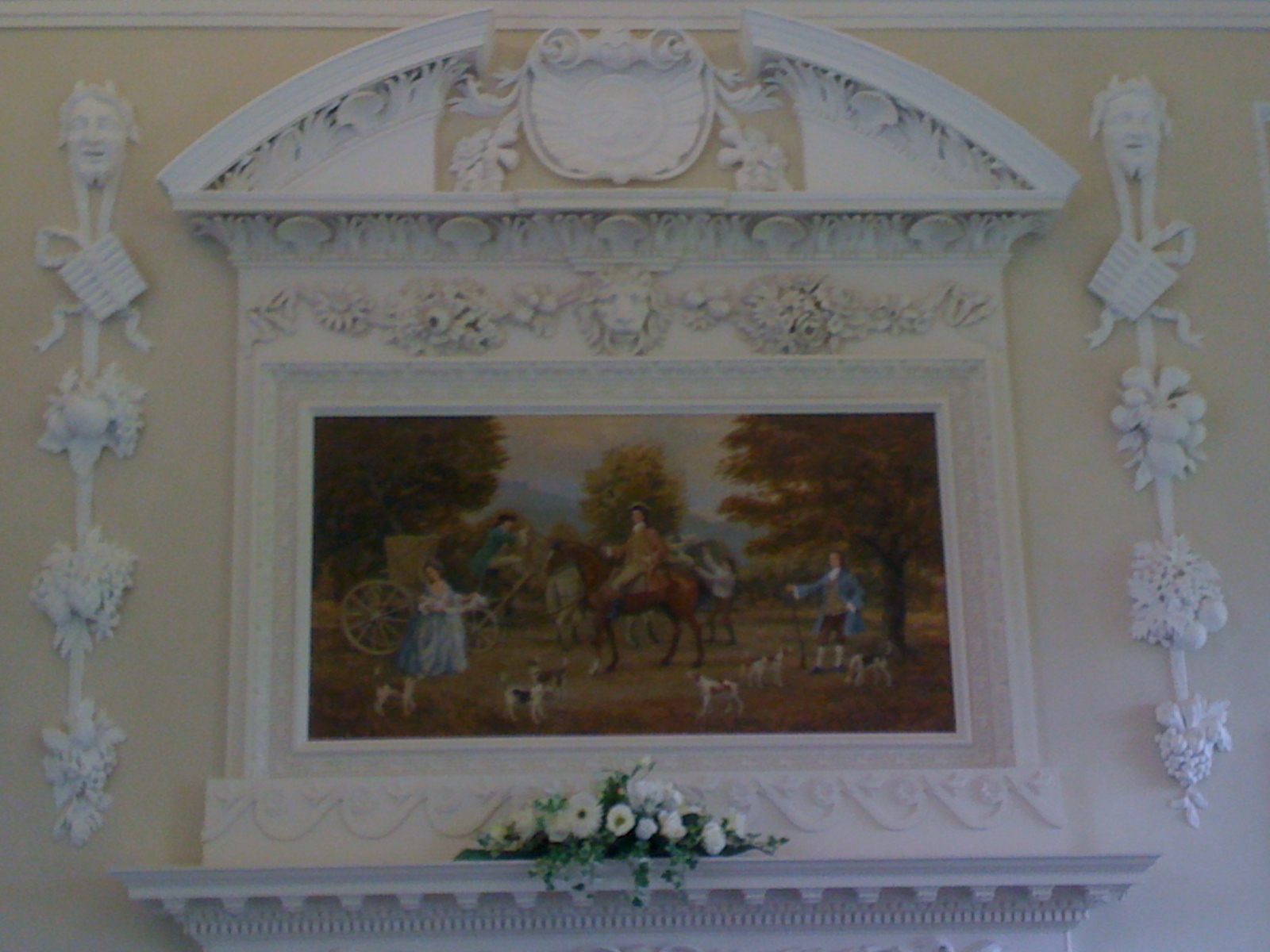
So today, i found a magnificent baroque/french style hideaway, right on my front door step- so to speak- in the most unlikely places (i would have thought) of South Lanarkshire, greater Glasgow, Scotland.
My boyfriend had been nagging me for months to go for a walk in the country park and we finally went today. Well, boy am i glad i agreed! Driving up the drive i saw the sign "Chtellerault" said "oh thats french!" and was then faced with the imposing and beautiful manour house dating from 1773.
Heres some pics i took (from a crappy iphone, next visit will be with some serious photography equip to do it justice (and some awesome textures for sl!)
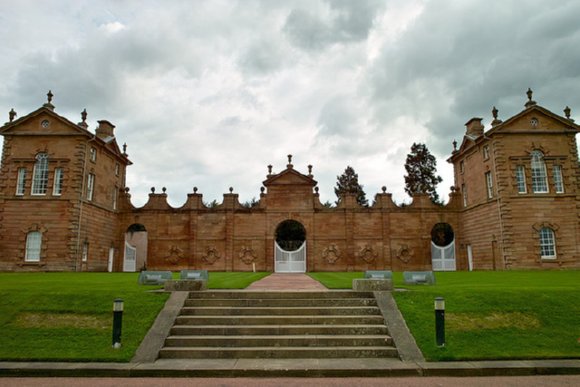
Brief History: (by wikipedia)
Chatelherault Country Park is a country park in Hamilton, south lanarkshire, Scotland. Its name is derived from the French town of Chtellerault , the title Duc de Chtellerault being held by the Duke of Hamilton.The country park is centred on the former hunting lodge of the now demolished Hamilton Palace. The lodge was designed by William Adam who favoured baroque and pavilion architecture, and was completed in 1734. It comprises two pavilions linked by a gateway. The north facade was visible from the palace and forms the front of the building. To the rear are formal parterre gardens. The buildings provided kennels, stables and accommodation for hunting parties returning from the woodlands to the south. Adam jokingly referred to his creation as 'The Dogg Kennel'. An avenue of lime trees linked the lodge and the palace, formerly located in Hamilton.
So who lived in a house like this?
James Hamilton, 2nd Earl of Arran (15151575) (also Duke of Chtellerault in the French nobility from 1548 until 1559).
Arran joined the pro-French faction, consenting to the marriage of the Queen to the French Dauphin, later Francis II of France .This led to the seven-year war with England now called the rough wooling which was declared on 20 December 1543. In 1548 the Queen of Scots went to live in the French court. For his work on negotiating her marriage, Hamilton was created Duke of Chtellerault , and made a knight of the order of St Micheal.
In 1554, Arran surrendered the regency to Mary of Guise, Queen Mary's mother. Hamilton gave up the Regency on the condition that he would be next in line after the Queen, if she died childless. But the Scottish succession had been secretly promised to France. In the first months of the Scottish Reformation, Hamilton continued to support Mary of Guise. He changed allegiance again in August 1559, joining the Protestant Lords of congregation to oppose the regency of Mary of Guise, and lost his French dukedom as a result. After the death of Guise, Hamilton persuaded the Parliament of Scotland to back a plan to marry his son James to Elizabeth 1 of England , and then after the death of Francis II of France in 1560 he attempted, without success, to arrange for James to marry the young widowed Queen Mary.
After Mary married Lord Danley in 1565 he withdrew to his estates in France. In 1569, he returned to Scotland and was imprisoned until, in 1573, he agreed to recognize Mary's infant James as King of Scotland.
So, all in all a great find today, i hope to re-create this estate in SL soon!
HRH, Louis-Stanislas, comte de Provence, decided to throw a picnic in the forest near the palace to celebrate all things natural and presumably good. When telling his plans to his dear Tantes the week before, the Madame Royale scoffed at him, suggesting that only a fool would host a dinner "in the old swamp," as she called it.
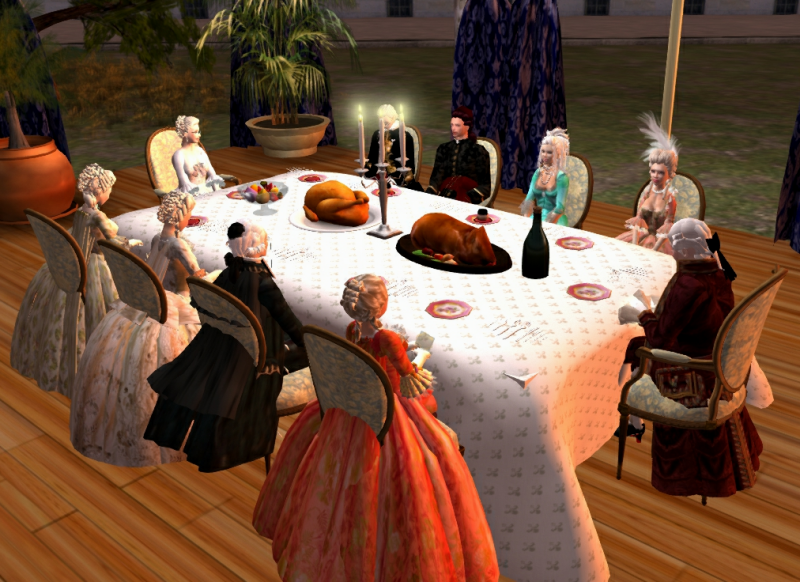
But, in all of his learned wisdom, he forged ahead with planning and created what he thought would be a most magnificent feast, attracting some of the most favoured of the French court. Madame Victoire hosted the event along with her nephew, much to the dismay of Royale (who cursed them both privately). The abbe' Joseph Terray was in attendance, along with a visiting Archbishop. The comte de Fraisac and the Mlle de Louvigny (who will wed later this week) cooed at each other, as the table did toward the newly engaged.
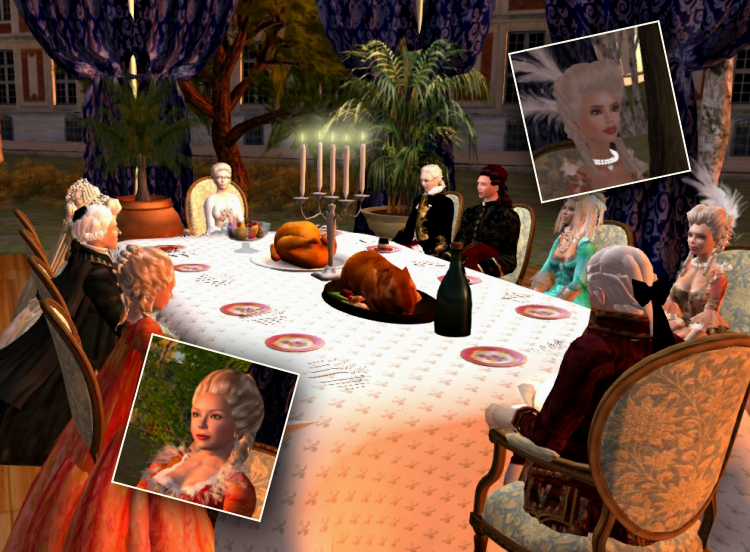
Toward the end of the meal, shortly after dessert had been served, after they had talked about nearly everyone that wasn't present (well, there were a few whispers when some weren't looking), HRH raised his glass to salute an accomplished feast, one that had united the harmony of humanity with the beauty of nature.
At that moment ... a swarm of mosquitoes descended on the courtiers like fabled locusts in Egypt, forcing the most delicate creatures in France toward the safety of a stone palace.
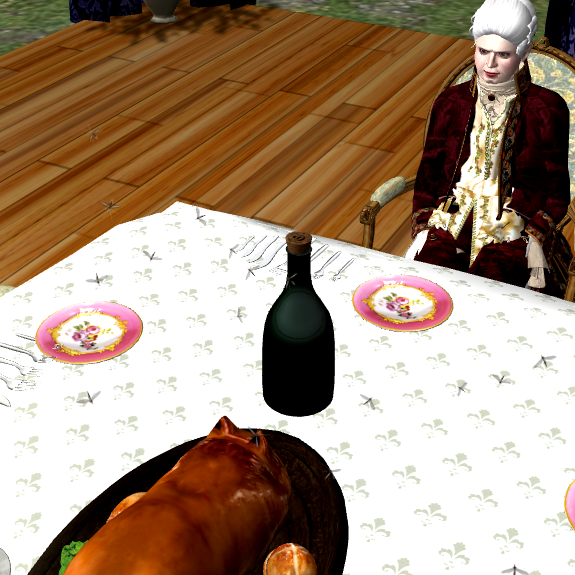
Stanislas was last to make it inside, and as he ran toward his suites, he was tortured by a familiar voice - that of his beloved aunt Adelaide, whose cackling could be heard clear across the vestibule.
((photos courtesy of Brownbat, aka "the Madame Victoire."
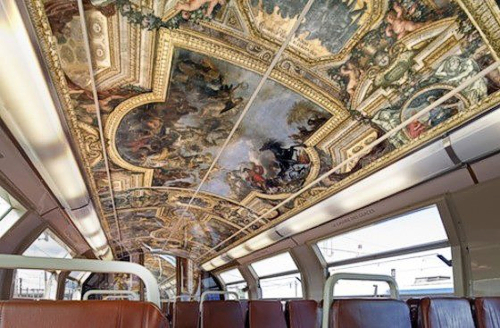
Hall of Mirrors' Ceiling
Just asmy glow from Chanel's "Versailles" Collection (see Chanel in Versailles: Seriously Frivolous ) was fading, along came some equally delightful Versailles related news!
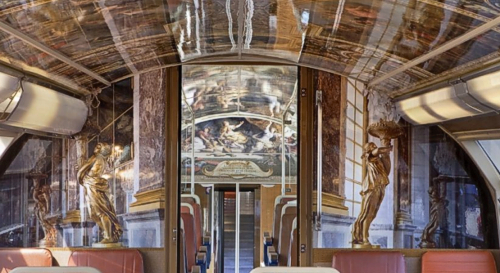
Hall of Mirrors
Return to Venezia Part 5 - June 1, 1781 - Weather: rainy but mild.
By Contessa Contre Courant, 2012-06-01
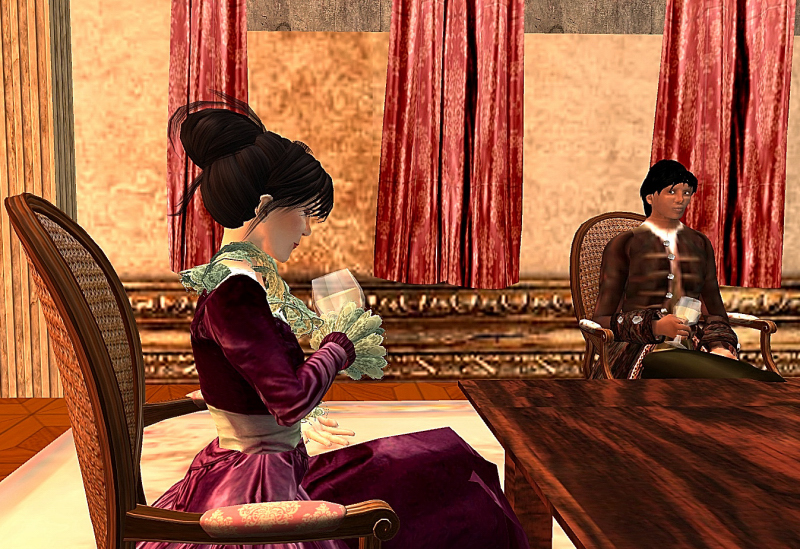 I am picking up my pen after a long while as my life has begun to take an interesting turn.
My dear protege, Vicomte Burly Mothman joined me in tasting lovely glass of wine this evening, during which time he asked me whether I would give some advice to a new friend of his, Sgnr Mercury Gandt and has already invited him to my rooms next Friday!! It seems I have no choice but to accept. According to Burly, Sgnr Gandt seems to be a rather nomadic soul who moves from town to town, tasting its pleasures and surviving off his gambling. He is here hoping to be introduced to members of the Venetian aristocracy so he may rise in wealth and influence. I am not too clear how he is going to achieve such an end with his limited resources since if one does not have friends in high places, one would need a great deal of money to buy the clothes and titles that would allow one to climb to those lofty realms. Clothes are expensive and honorary titles hard to acquire without a great number of ducats.
I am also afraid Sgnr Gandt may be disappointed by me, as my connections are not with the aristocracy but with the demi monde of courtesans, who, although rich and powerful, do not inhabit the higher echelons of the society of La Serenissima, no matter how low the Republic has sunk in the past century! One never knows, however, perhaps one courtesan may take him under her heavily perfumed wing and introduce him to her patron.
I hope that others might come to this meeting on Friday; they may be able to supplement the information I can give and connections I can generate.

The sun was just coming up as the tavern keeper Achille Giglio made his way along the so-called smuggler's wharf to where his brother Alfonso kept their small fishing boat. The weather looked good, so he was not concerned about crossing over to the mainland in such a modest little craft. And as the padrone had asked him to exercise extreme discretion in carrying out this assignment, it was going to work out well. No one would think he was going on a journey of any significance. He took no supplies with him, no extra clothing, no pack. It would look as if he was just going out for a while, maybe to catch something for the soup kettle.
In fact, Achille actually was carrying something--but he was carrying it entirely in his head. The Professore had carefully rehearsed him in memorizing the message that was go to la Contessa Foscari, all the way in Venezia. But Achille's part of the asignment would only take him to Caserta, to the old cathedral, where he would pass on the verbal message to his cousin the Sacristan. His cousin would then see that it got to the Professore's old friend at the Abazzia di Monte Cassino. From there, the message would be passed along, moving from one friend or associate to another...always verbal, never written down. Even so, the Padrone could have confidence it would get to its destination in its entirety and absolutely correct. All those who made up the network were men used to memorizing and repeating...actors, clerics, poets, scholars...
As he cast off and raised his sails, Achille thoughtabout how he was soon to be an actor himself. The Professore had asked him to help with the play that a visiting Frenchman was organizing. They wanted him to play some spanish fellow, a servant....Figaro, was the name...apparently he was the hero.

Achille reflected that he had not heard of any plays before in which a servant was the hero. What an interesting idea. Weren't the heroes in stories always supposed to be something like a great king, or maybe a knight? Never a servant...or a barber...
...or a tavern-keeper.
Like this task. Nothing heroic about it...just doing the job that the Padrone asked him to do. In this case, it wasn't even one of those dire situations that the Professore sometimes got himself into. Just trying to straighten out some confusion that probably was created by a business competitor of that silver-haired Venetian Conte who had showed up on the island recently.
Achille was glad that he was not the Conte. The man obviously had a great many concerns and worries weighing him down, and probably seldom was allowed to have any fun. He could tell that from the look in the Conte's eyes. The tavern-keeper could also tell that the Conte Foscari had aged prematurely. The Professore was probably a good ten years older than the Conte, but they looked the same age. No, truth be told, his Padrone actually looked younger than the Conte by a few years.
Must be a damn hard life being the head of a noble mercantile house in Venezia , thought Achille. Sure am glad all I have to do is run a tavern on Melioria and carry messages for the Padrone every now and then.
As he rounded the rocks that sheltered the harbor and headed towards the rising sun over the distant mainland, Achille looked around to make sure no one was paying much attention to him, and then let out his mainsail a bit more to catch the breeze that was running from the west. It filled nicely and pulled the little boat along at a rapidly increasing clip. Achille smiled as he sat up on the gun'l to counterbalance the pull of the sail. With the sunrise washing his face with warmth, the cries of the gulls filling his ears, and the clean smell of the sea pouring over him while the little boat hurried along, he felt absolutely convinced that he had a far better life than any nobleman from Venezia.
A dark thought suddenly flickered through his mind -- perhaps the situation was more serious than it seemed? He hoped that the pretty Contessa was not in some kind of real trouble or danger. Everyone liked the Contessa Foscari and were always glad when she came to visit Melioria. She was very nice -- so good to those apprentices -- and she had the most beautiful hair. Achille thought about the Contessa's hair and sighed.
Oh well , he thought. Everything's probably just fine . Not that big of a deal.
He looked around once more to make sure no one was following him. Nothing.
As he turned his eyes back towards the mainland, another thought crossed his mind. If this is not a serious situation, why is the Professore sending me with this message? The Conte was also sending the same message by carrier pigeon. The verbal message being carried by Achille to the Padrone's network of friends was a back-up, in case something happened to the Conte's pigeons.
Achille mused to himself, The Conte and the Professore...they are so determined to make sure the message gets to the Contessa, one way or the other...
This must be something important...

I will not let the Padrone down...
Journal of Conte Filippe Foscari
26 of May, year of our Lord 1781

...Whileonbusiness in Tuscany, Ireceiveda message from my daughter Elena, requesting me to join her in Melioria as soon as possible.
The Ship from Naples arrived in Melioria late in the afternoon, and following the advice of the Inn keeper, Signora Macbain, I set of in search of a certain Sior Aldo Stern, who has taken over the smooth running of the island since the Princippe disappeared in the new world.

Sior Stern proved a most hospitable and charming fellow, and invited me to take coffee in his office.
We discussed many general subjects for some time.
I could not help observing that there was only one picture in his office. Alovelyportrait of the late Madame Pompadour. I commented on her unique charm, and note that Sior Stern looked very wistful, as he told me he had known her well.
There is more to Sior Aldo Stern then meets the eye, of that I am sure.

Finally I enquired about the whereabouts of my daughter Elena.
Sior Stern became very serious, put his finger to his lips to indicate for me to be silent and led me out of the office onto the pier.
Here, safe from being overheard, he informed me that Elena had sailed forVenice2 weeks previously, with two companions. Fiorino one of theyoungApprentices, and a Sior Mercury Gandt, an English Gambler and Adventurer.
It seems that Elena made this decision based on a message she had received from me requesting her to return Homeimmediately.
I inform Sior Stern that I sent no such message. We agree that both messages must have been forgeries, and sent by someone who has an interest in having us both travel in opposite directions.
But whom?
Sior Stern offers me the full use of hisintelligenceand courier service, which I , always interested in a good organisation, gratefully accept.

Later after having taken my leave of Sior Stern, I sit, in the best of company, watching the sun set accross the bay of Naples, pondering all these questions.