
VW: Second Life
Location:
Country:

SL Account Name: Delos Helstein
Display Name: Thomas Richard Cave-Betterton
An old member of the historical community noted historical SL architect, and interior designer. I also have a separate account, AndreJacquemin Resident, whose a renowned court jeweler to the historical community. Owner of Ancient Regime, a consolidated merger of 'Delosian Designs' by Delos Helstein, and 'Joyaux de Jacquemin' by Andrejacquemin Resident.
Delosian Designs
https://marketplace.secondlife.com/stores/86972
Joyaux de Jacquemin
https://marketplace.secondlife.com/stores/133653
___________________________________________________________________________________________
Roleplay Character
___________________________________________________________________________________________
Thomas Richard Cave-Betterton
2nd Earl of Rushcliffe
United Kingdom, and Continental Business Magnate
British Landowner, Member of Parliament
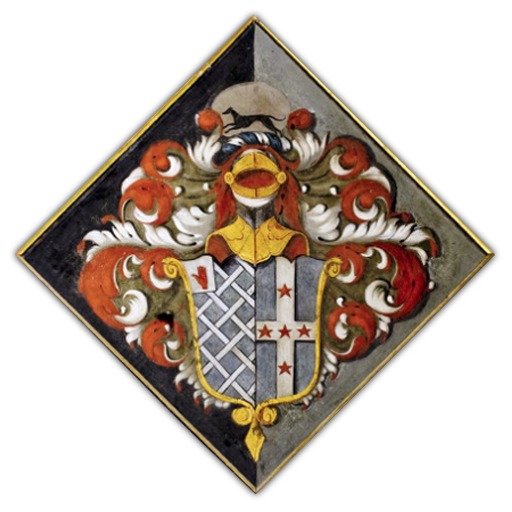
The Family
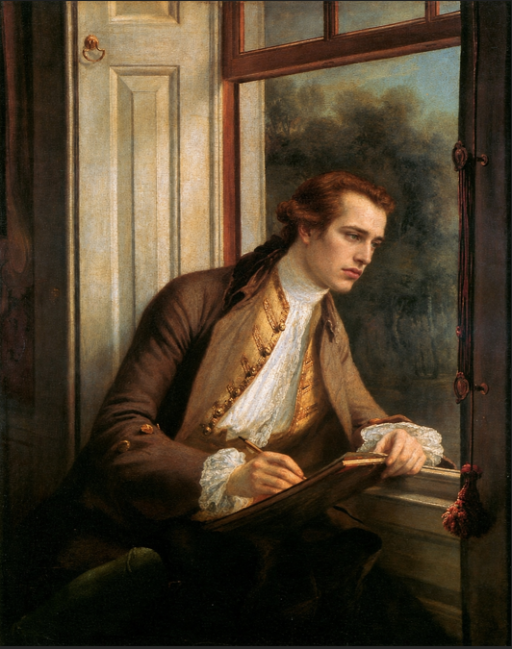
Thomas “Delos” Richard Cave-Betterton was born in 1742 at Rushcliffe Manor in Nottinghamshire, the ancestral seat of the Earls of Rushcliffe. He was the only son of Charles Cave and Lady Eleanor Betterton, and through them inherited the blood and traditions of two markedly different families. On his father’s side, he was the grandson of Sir Thomas Cave, 3rd Baronet of Stanford Hall; through his mother, he was the grandson of Henry Betterton, 1st Earl of Rushcliffe, who at the time of Thomas’s birth also sat in Parliament for Rushcliffe.
Born of the union between the ancient House of Cave and the recently ennobled, prosperous House of Betterton, Thomas entered the world surrounded by the privileges, expectations, and comforts of the English landed gentry. He was doted upon by careful and affectionate parents and spent his earliest years amid the old Jacobean halls of Rushcliffe Manor, even as the house itself underwent a period of considerable change.
Following upon the architectural ambitions already pursued by his uncle, Verney Cave, at Stanford Hall, Thomas’s grandfather commissioned William Smith to renovate and modernize the old manor. While the work progressed, the family divided its time between London and Claydon House in Buckinghamshire, the ancestral home of Thomas’s paternal grandmother, Lady Margaret Cave, née Verney.
The death of his maternal grandfather in 1749 brought the young Thomas into his inheritance, and at only seven years of age he became the 2nd Earl of Rushcliffe. During his minority, his father exercised careful stewardship over the family estates and fortune, while his mother devoted herself closely to the education and upbringing of her son. Lady Cave appears to have taken particular care that privilege should not excuse idleness, and Thomas’s education was consequently supervised with considerable attention.
The small family circle expanded in 1751 with the arrival of Thomas’s young cousin, Renatta Barrymore, who came to live with the Caves following the death of her parents. Lady Cave raised Renatta with the affection of a daughter, and she and Thomas grew so closely together that society came to regard them almost as brother and sister. In time, the two were affectionately known as the “Cave siblings.”
At home, however, their reputation was rather less dignified. Thomas and Renatta were remembered as mischievous, spirited, but fundamentally well-adjusted young people. He was perhaps the prouder of the two; she, almost certainly, the cleverer. Together they possessed a talent for mischief that produced laughter in some quarters and, on occasion, tears in others. Their escapades became part of the private folklore of the household and formed the foundation of a companionship that would endure into adulthood.
The Grand Tour
In 1756, despite the protests of his mother and the tears of the young Renatta, Thomas was sent abroad upon his Grand Tour in accordance with his father’s wishes. Still very young, he entered continental Europe at an impressionable age and encountered a world altogether more vivid and extravagant than the ordered country-house existence of his childhood.
His travels first carried him south to Naples, where he passed a summer immersed in the theatrical splendour of Italian Baroque art and architecture. From Naples he travelled to Rome for the winter. There, amid the churches, palaces, antiquities, collections, and ruins of the Eternal City, Thomas began to understand the power of art not merely as decoration, but as an instrument through which wealth, ancestry, taste, and identity might be fashioned into an image.
It was a lesson he would never entirely forget.
His first journey abroad was abruptly interrupted in 1757. News of his father’s death, accompanied by reports of his mother’s declining health, brought Thomas home from Rome. Once the family accounts and estates had been settled, the young Earl found himself in possession of considerable wealth and, for the first time, without the restraining hand of his prudent father.
Even his relatively brief exposure to Italy had already transformed his tastes. Rushcliffe Manor, still bearing much of its Jacobean character, no longer seemed sufficient to his increasingly ambitious imagination. Thomas therefore embarked upon a far more extensive programme of alteration, refacing and enlarging the old house in the Palladian manner. What had begun as the careful modernisation of an ancestral manor was gradually becoming something grander: an architectural expression of the young Earl himself.
With work underway at Rushcliffe and arrangements made for the care of his mother and Renatta, Thomas departed England once more in the autumn of 1757 and returned to Rome to continue the Grand Tour.
Distance did little to diminish his attachment to Renatta. He wrote to her consistently from abroad, sending books, pamphlets, fashionable publications, and the newest writings that caught his attention. The stream of parcels appears to have delighted Renatta rather more than it pleased the Dowager Lady Cave, who regarded at least some of her son’s selections—and perhaps the expense attached to them—with considerably less enthusiasm.
From Rome, Thomas eventually travelled north to Venice, and there discovered a city particularly suited to his temperament. Venice indulged nearly every appetite the young Earl possessed. Its paintings and sculpture fed his growing enthusiasm for collecting; its music and theatres enchanted him; its masked festivities, salons, and sophisticated society offered pleasures quite unlike those of England.
He purchased paintings, sculptures, decorative objects, and curiosities with enthusiasm, dispatching crate after crate back to Rushcliffe Manor while his long-suffering mother lamented the mounting expense. Yet Venice gave Thomas something beyond a collection. Its mixture of spectacle, art, music, ceremony, and aristocratic sociability encouraged in him increasingly lofty ambitions for the kind of life he wished to create upon his eventual return to England. By 1759 he had left Venice for Paris.
Among the cultivated circles of Parisian society, Thomas acquired the polish that his Italian travels had begun to give him. He learned to move easily among fashionable company, refining his conversation, manners, dress, and social instincts. The proud and mischievous boy of Rushcliffe was gradually becoming an accomplished young gentleman: well travelled, well spoken, fashionably dressed, and increasingly conscious of the effect he produced upon others.
At Home
The death of his mother in the spring of 1760 finally recalled him to England. Her passing marked the end of the family world into which Thomas had been born. His parents and grandparents were gone, and his closest remaining familial attachment was now Renatta, together with the wider circle of his Cave and Verney cousins.
Thomas returned to find work at Rushcliffe still progressing. The ancient manor of his childhood was being transformed into the Palladian country house he had imagined, just as years abroad had transformed its young master.
Now eighteen, independently wealthy, unmarried, and bearing one of the newer titles of the English peerage, Thomas Cave-Betterton entered London society as the eligible Earl of Rushcliffe. He took his place among the ton with confidence, bringing with him something of the splendour of Rome, the appetite for pleasure he had acquired in Venice, and the cultivated social graces he had learned in Paris.
Yet, for all that he had inherited, collected, rebuilt, and experienced, Thomas’s adult life had scarcely begun.
What course the young Lord Rushcliffe would choose remained an open question. Perhaps another adventure awaited him beyond England. Perhaps the glittering society into which he had entered would provide a wife capable of matching his considerable character. There were even whispers of political ambition. Both of his grandfathers had sat in Parliament, and some wondered whether Thomas might eventually seek to continue that family tradition and claim a public life alongside his social one.
For the moment, however, the newly returned Earl stood at the threshold of adulthood: master of Rushcliffe, heir to two families, possessed of wealth and taste, and armed with the dangerous confidence of a young man who had already seen enough of the world to believe that he understood it.
The greater part of his story was still to come.

Winks atthe Conte Bon....Welcome to the Ning!!!
Caro Conte, It was a pleasure to meet you again, it is always a pleasure to meet a fellow Venetian. I believe my father may be friends with yours, he has certainly mentioned your family.
You must visit us at our "Villa" in Torbiato if you are travelling through Lombardy. We are staying there until "La Malcontenta" is repaired after the awful Floods we had this Summer. I do hope your properties were not too badly damaged.
I look forwards to our next meeting.
....I believe we may meet soon,. there is a Ball at the residence of a fellow Venetian, who has opened his Palazzo for the season....
It was a pleasure tobe introduced toyou at the Spring Ball, Milord! I appreciated how you are'galant' to the Ladies, and ' courtois' to the Gentlemen, and I look forward to meeting you again soon!
My sincere congratulations to your new title and nationality Your Highness! Venezia lost a Conte but Versailles won a Prince in every respect! I wish you health and good fortune!
Conte Myron di Loredan